
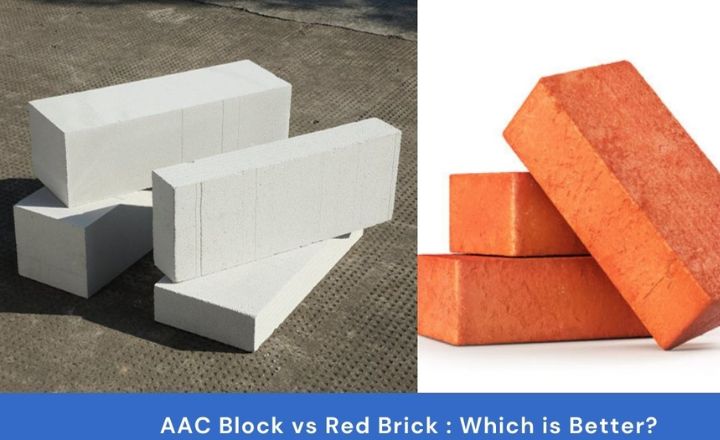
In this article, “What is the difference between Red Brick vs AAC Block,” we will explore the key characteristics, manufacturing processes, and advantages of both materials. Get ready to discover which option aligns best with your budget and building goals, while also considering the environmental impact of your choices.
Bricks are traditional, clay-based building materials, whereas AAC blocks are made from lightweight aerated concrete. The key difference lies in their composition and weight, with AAC Autoclaved Aerated Concrete blocks being lighter and more energy efficient than bricks.
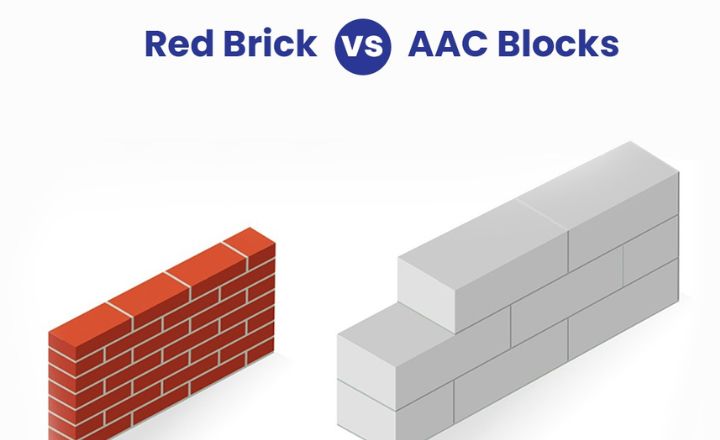
In contrast, AAC blocks offer lightweight and energy-efficient properties, making them an environmentally friendly and cost-effective option for modern construction projects. Understanding the differences between these two building materials is crucial for making informed decisions in construction and building projects.
What is Brick?
Brick, specifically red brick, is not just a building material; it’s a canvas for creativity and history interwoven into one. Its composition typically includes clay or concrete, making it exceptionally durable and resistant to the elements.
While many regard red bricks for their structural integrity, what sets them apart is their ability to convey warmth and character, easily integrating into various architectural styles.
From modern urban lofts to quaint countryside homes, these bricks adapt seamlessly, allowing architects and builders to create stunning, visually engaging spaces.
Moreover, the versatility of red brick extends beyond aesthetics. Its natural insulating properties provide energy efficiency, helping regulate indoor temperatures and reduce heating costs.
This makes it an environmentally friendly choice in today’s conscious building practices. As urban landscapes evolve, red brick remains a beloved option not just for its timeless beauty but also for its ecological benefits.
AAC BLOCKS VS RED BRICKS – COMPARISON
AAC (Autoclaved Aerated Concrete) blocks and red bricks are two widely used building materials in the construction industry. Although both are used for wall construction, they differ in terms of weight, strength, insulation, cost, durability, and construction efficiency.
Red bricks are traditional clay bricks known for their high compressive strength and long-lasting durability. In contrast, AAC blocks are lightweight, eco-friendly, and provide better thermal and sound insulation, making them suitable for modern construction.

The choice between AAC blocks and red bricks depends on the project’s requirements, budget, climate, and structural needs.
While red bricks are preferred for their strength and availability, AAC blocks are gaining popularity for reducing a building’s overall weight, accelerating construction, and improving energy efficiency.
Therefore, understanding the differences between these two materials helps builders, engineers, and homeowners select the most suitable option for safe, economical, and sustainable construction.
1. Availability of sizes
| Availability of sizes | AAC Blocks | Red Bricks |
|---|---|---|
| Size options | Available in various shapes and sizes, and can be customized to meet specific requirements | Usually available in one or two standard sizes only |
| Customization | Can be cut or produced in different dimensions as needed | Not usually customizable; changes are generally not possible |
2. Technical properties
Here is the table with all links and source names removed:
| Technical Properties | AAC Blocks | Red Bricks |
|---|---|---|
| Weight | Lightweight and reduces the dead load on the structure. | Heavier and increases the dead load on the structure. |
| Density | Lower density. | Higher density. |
| Thermal Insulation | Provides better heat insulation and keeps interiors cooler. | Offers lower thermal insulation. |
| Sound Insulation | Better soundproofing performance. | Lower sound insulation. |
| Fire Resistance | Excellent fire resistance. | Comparatively lower fire resistance than AAC blocks. |
| Water Absorption | Generally has higher water absorption. | Generally has lower water absorption. |
| Strength | Adequate strength for non-load-bearing and many wall applications. | High compressive strength and is suitable for load-bearing structures. |
| Workability | Easy to cut, shape, and install. | Requires more effort to cut and shape, but is suitable for conventional masonry work. |
3. Composition And Manufacturing Process
| Composition and Manufacturing Process | AAC Blocks | Red Bricks |
|---|---|---|
| Raw Materials | Made from fly ash or sand, cement, lime, and water. | Made from clay, shale, or a combination of both. |
| Manufacturing Method | Ingredients are mixed into a slurry, poured into molds, and cured in an autoclave under steam and high pressure. | Clay is molded into shape and then fired in a kiln at high temperature. |
| Hardening Process | Hardens through a chemical reaction during autoclaving. | Hardens through kiln firing, which gives it strength and durability. |
| Typical Characteristics | Lightweight and provides good thermal insulation. | Traditional masonry unit with long-standing use and a durable finish. |
5. Thermal And Sound Insulation
| Thermal and sound insulation | AAC Blocks | Red Bricks |
|---|---|---|
| Thermal insulation | Excellent thermal insulation; helps keep buildings cooler in hot weather and reduces heat transfer. | Lower thermal insulation; transfers more heat compared to AAC blocks. |
| Sound insulation | Better sound insulation; helps reduce noise transmission through walls. | Moderate to lower sound insulation compared to AAC blocks. |
| Energy efficiency | More energy efficient because of better insulation performance. | Less energy efficient because it allows more heat gain or loss. |
6. Cost And Availability
| Cost and Availability | AAC Blocks | Red Bricks |
|---|---|---|
| Initial Material Cost | Usually higher per unit or per cubic meter than red bricks. | Usually cheaper upfront per brick. |
| Total Wall Cost | Can be more economical because it reduces the cost of mortar, plaster, labor, and structural load. | Often results in a higher overall wall cost due to increased mortar, plaster, labor, and structural requirements. |
| Availability | Commonly available in cities and developing markets, but may be limited in some rural areas. | Widely available in almost all regions. |
| Cost Trend | More cost-effective for projects that require faster construction, lighter weight, and better insulation. | More suitable for projects with a lower initial budget and traditional construction methods. |
7. Environmental Impact
| Environmental Impact | AAC Blocks | Red Bricks |
|---|---|---|
| Raw Material Use | Often made from industrial by-products such as fly ash or sand, helping to reduce waste. | Made from clay or topsoil, which can contribute to land degradation and soil loss. |
| Manufacturing Emissions | Generally has a lower environmental impact and a smaller carbon footprint. | Brick kilns produce higher air pollution and greenhouse gas emissions. |
| Energy Use | Lightweight material reduces transportation energy and structural load. | Heavier material requires more energy for transportation and construction. |
| Operational Energy | Better thermal insulation helps reduce heating and cooling energy consumption. | Lower thermal insulation can increase building energy use. |
| Recyclability / Waste | Can be reused or recycled more easily, producing less construction waste. | Generates more demolition waste and is less material-efficient compared to AAC blocks. |
You can explore the classification of Rocks
Advantages of Red Bricks
- Strong and Durable: Red bricks can withstand heavy loads and have a long service life.
- Good Thermal Insulation: They help maintain comfortable indoor temperatures by reducing heat transfer.
- Fire Resistant: Red bricks are non-combustible and provide excellent resistance to fire.
- Sound Insulation: They reduce outside noise and improve indoor acoustic comfort.
- Low Maintenance: Red brick structures require minimal maintenance over time.
- Widely Available: Red bricks are easily available and commonly used in construction.
- Affordable Upfront: They generally have a lower initial material cost than many alternative building materials.
- Traditional Appearance: They provide a classic, attractive, and timeless architectural look.
- Environmentally Friendly: Made from natural clay and can be reused or recycled in some applications.
Advantages of AAC Blocks
- Lightweight: AAC blocks are much lighter than red bricks, reducing the dead load on the structure.
- Good Thermal Insulation: They help keep buildings cooler in summer and warmer in winter.
- Sound Insulation: Their porous structure absorbs sound and reduces noise transmission.
- Fire Resistant: AAC blocks provide excellent fire resistance, depending on their thickness.
- Faster Construction: Their larger size and ease of cutting reduce labor time and speed up construction.
- Energy Efficient: Better insulation helps reduce heating and cooling costs.
- Environmentally Friendly: They require fewer raw materials and produce less construction waste.
- Uniform Size and Shape: Factory-manufactured blocks have consistent dimensions, improving masonry quality.
- Pest Resistant: AAC blocks are resistant to termites and other pests.
- Overall Cost Saving: Although the initial cost may be higher, reduced labor, mortar, and structural costs make AAC blocks more economical in the long run.
Applications (Where They Are Used)
AAC Blocks
AAC blocks are widely used in modern residential, commercial, and industrial buildings. They are suitable for internal and external walls, partition walls, multi-storey buildings, hospitals, schools, hotels, and office buildings.
Due to their lightweight nature and excellent thermal insulation, AAC blocks are preferred in high-rise construction and energy-efficient buildings.
Red Bricks
Red bricks are commonly used in residential houses, boundary walls, load-bearing walls, foundations, pavements, chimneys, and traditional construction projects. They are widely preferred in areas where bricks are easily available and where high compressive strength and durability are required.
Which One is Better?
Both AAC blocks and red bricks have their own advantages and disadvantages.
AAC blocks are a better choice for modern construction because they are lightweight, provide excellent thermal and sound insulation, reduce the structural load, and speed up construction.
On the other hand, red bricks are stronger, highly durable, and more suitable for traditional buildings and load-bearing structures. Therefore, the best choice depends on the project requirements, budget, climate, and structural design.
Conclusion
AAC blocks and red bricks are both important building materials used in the construction industry.
AAC blocks offer advantages such as lightweight construction, better insulation, faster installation, and improved energy efficiency. Red bricks, however, are known for their high strength, durability, and long service life.
While AAC blocks are becoming increasingly popular in modern construction, red bricks remain a reliable option for conventional buildings. Selecting the appropriate material should be based on the specific needs of the project, ensuring safety, cost-effectiveness, durability, and sustainability.