
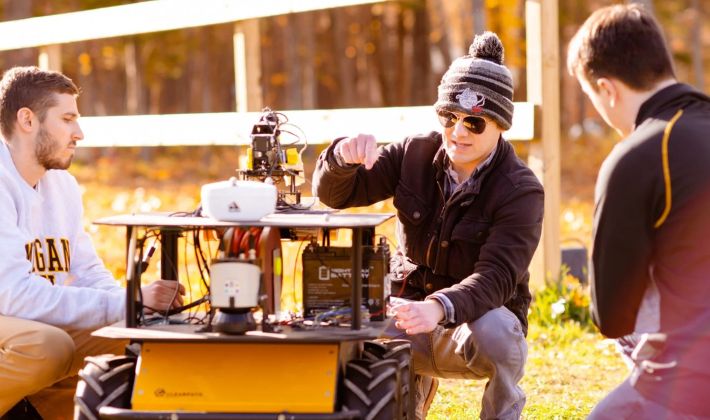
Robotics Engineering is the multidisciplinary branch of engineering that focuses on designing, building, programming, and maintaining robots and robotic systems that can sense, decide, and act in the physical world.
Robotics engineering is a multidisciplinary branch of engineering that focuses on the design, development, fabrication, assembly, powering, programming, testing, and maintenance of robots for a wide variety of industrial, commercial, scientific, and domestic applications.
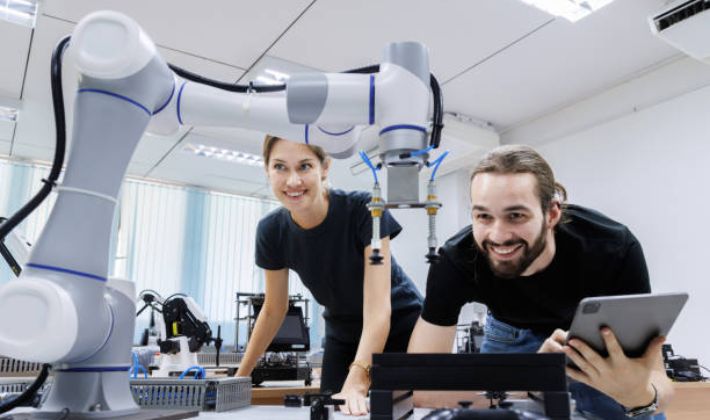
Modern robots are equipped with advanced technologies such as machine learning, computer vision, the Internet of Things (IoT), cloud computing, and embedded systems, enabling them to analyze data, make decisions, adapt to changing environments, and collaborate safely with humans.
Purpose of Robotics Engineering
The primary purpose of robotics engineering is to design, develop, and deploy intelligent robotic systems that improve efficiency, accuracy, productivity, and safety across a wide range of industries.
By integrating mechanical engineering, electrical engineering, computer science, artificial intelligence (AI), and information technology (IT), robotics engineering aims to automate repetitive, complex, and hazardous tasks that are difficult or unsafe for humans.
Modern robotic systems are designed to perform operations with high precision, reduce human error, lower operational costs, and enhance overall performance in sectors such as manufacturing, healthcare, agriculture, aerospace, logistics, defense, and smart infrastructure.
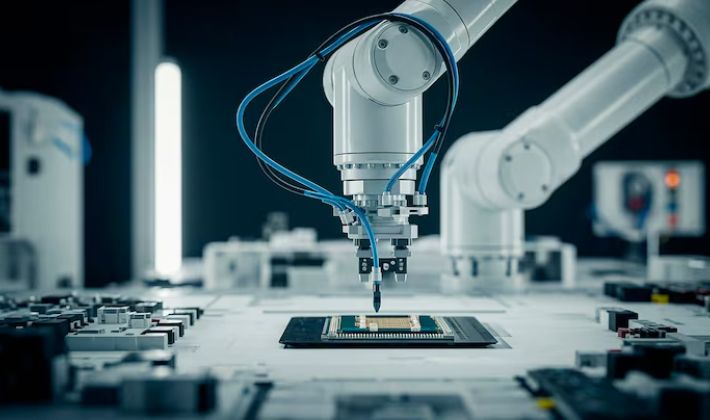
Key Purposes of Robotics Engineering
- Automate repetitive and time-consuming tasks.
- Improve productivity and operational efficiency.
- Enhance precision and reduce human errors.
- Increase workplace safety by handling hazardous operations.
- Reduce labor costs and optimize resource utilization.
- Develop intelligent robots using Artificial Intelligence (AI).
- Integrate robotics with Information Technology (IT) and the Internet of Things (IoT).
- Support innovation in healthcare, manufacturing, agriculture, aerospace, and logistics.
- Perform tasks in dangerous or inaccessible environments such as deep oceans, disaster zones, and outer space.
- Improve product quality through consistent and accurate operations.
- Enable human–robot collaboration in industrial and service environments.
- Drive digital transformation and smart automation in Industry 4.0.
- Solve complex real-world engineering and scientific problems.
- Promote sustainable, efficient, and technology-driven solutions for future industries.
What Do Robotics Engineers Do?
Robotics engineers are responsible for designing, developing, programming, testing, operating, and maintaining robotic systems that automate tasks across a wide range of industries.
Their work combines mechanical engineering, electrical and electronics engineering, computer science, artificial intelligence (AI), and information technology (IT) to create intelligent robots capable of performing complex, repetitive, and hazardous tasks with high precision and efficiency.
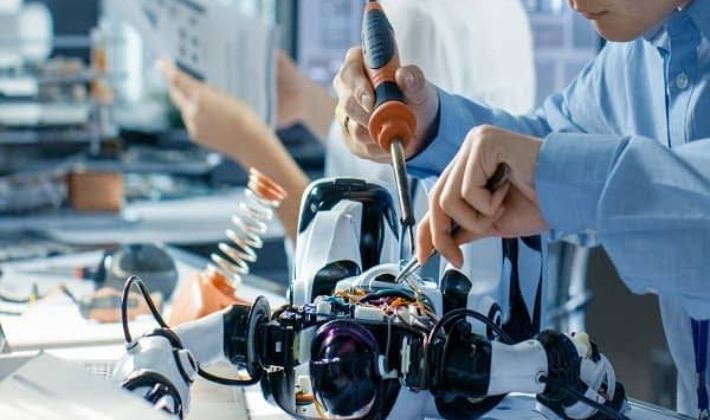
From the initial concept and system design to deployment, optimization, and long-term maintenance, robotics engineers oversee every stage of a robot’s lifecycle. They develop innovative robotic solutions for industries such as manufacturing, automotive, aerospace, healthcare, agriculture, logistics, defense, construction, mining, and research.
By integrating advanced technologies such as machine learning, computer vision, embedded systems, sensors, actuators, cloud computing, and the Robot Operating System (ROS), robotics engineers ensure that robots can operate safely, adapt to changing environments, and collaborate effectively with humans.
Their expertise plays a crucial role in improving productivity, reducing operational costs, enhancing workplace safety, and driving the advancement of smart automation and Industry 4.0.
Key Responsibilities of Robotics Engineers
1. Designing Robotic Systems
Robotics engineers design innovative robots and robotic systems based on specific industrial or commercial requirements. They create conceptual models, technical drawings, CAD designs, and system architectures while determining the robot’s structure, movement mechanisms, materials, sensors, actuators, and functional capabilities.
2. Building and Developing Robots
After completing the design phase, robotics engineers assemble and integrate mechanical, electrical, and software components into a fully functional robotic system.
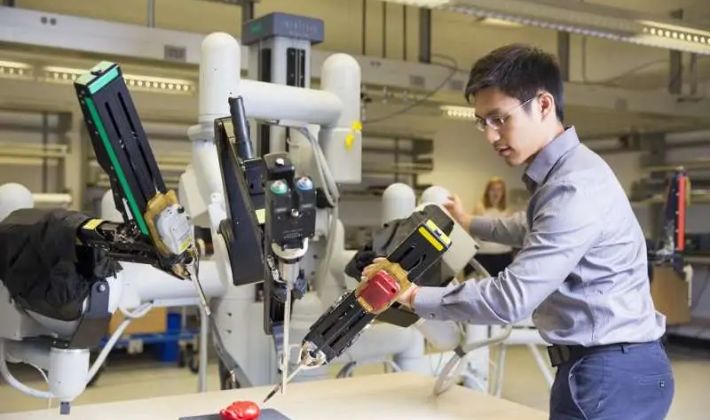
This includes installing motors, sensors, controllers, batteries, communication modules, embedded systems, and other essential hardware.
3. Programming Robots
Programming is one of the most important responsibilities of a robotics engineer. Engineers develop software that controls robot movement, decision-making, navigation, object recognition, and task execution using programming languages such as Python, C++, Java, MATLAB, and Robot Operating System (ROS). They also integrate Artificial Intelligence (AI), Machine Learning (ML), and Computer Vision technologies to enable autonomous operation.
4. Testing and Validation
Before deployment, robotic systems undergo extensive testing to ensure they operate safely, accurately, and reliably. Robotics engineers simulate real-world scenarios, identify technical issues, optimize control algorithms, calibrate sensors, verify system performance, and ensure compliance with safety standards.
5. Operating and Monitoring Robotic Systems
Once deployed, robotics engineers supervise robot operations to ensure maximum efficiency and reliability. They monitor system performance, analyze operational data, update software, improve robot behavior, and integrate robots with cloud platforms, industrial networks, and enterprise management systems.
6. Maintenance and Troubleshooting
Robotics engineers perform preventive maintenance, diagnose hardware and software faults, replace damaged components, repair electrical and mechanical systems, update firmware, and continuously improve robotic performance throughout the robot’s operational lifecycle.
7. Research and Innovation
Many robotics engineers work in research and development (R&D), where they develop next-generation robotic technologies. They explore emerging fields such as autonomous robots, collaborative robots (Cobots), swarm robotics, humanoid robots, autonomous vehicles, drone technology, soft robotics, and intelligent automation powered by Artificial Intelligence and Information Technology.
8. Collaboration with Multidisciplinary Teams
Robotics engineers frequently collaborate with mechanical engineers, electrical engineers, software developers, AI specialists, industrial engineers, and IT professionals to develop advanced robotic solutions that meet technical, operational, and business requirements.
Summary of Robotics Engineers’ Responsibilities
- Design intelligent robotic systems and automation solutions.
- Develop robot hardware and mechanical structures.
- Integrate sensors, actuators, motors, and controllers.
- Program robots using Python, C++, ROS, and AI technologies.
- Test, validate, and optimize robotic performance.
- Monitor, operate, and maintain robotic systems.
- Troubleshoot hardware and software issues.
- Conduct research to develop innovative robotic technologies.
- Improve industrial automation, productivity, and workplace safety.
- Support digital transformation through Industry 4.0, Artificial Intelligence, and Information Technology.
Types of Robots
Robots are classified into different types based on their design, mobility, functionality, and intended applications. Each type of robot is developed to perform specific tasks efficiently in industrial, commercial, medical, agricultural, and domestic environments.
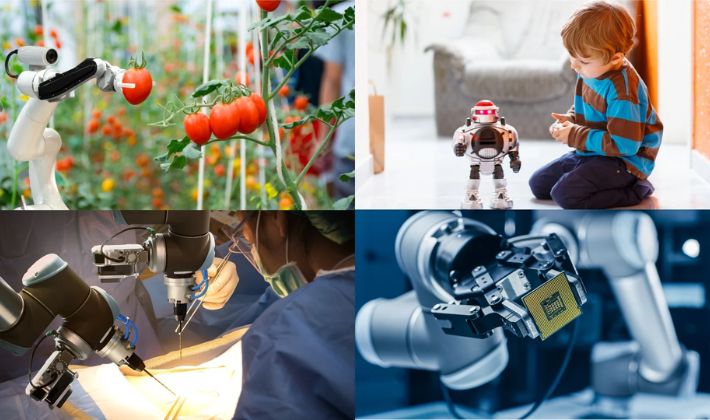
With the integration of Artificial Intelligence (AI), Information Technology (IT), Machine Learning, computer vision, and advanced sensor technologies, modern robots have become more intelligent, autonomous, and capable of adapting to dynamic environments.
Understanding the different types of robots helps engineers select the most suitable robotic system for a particular application, ensuring improved productivity, precision, safety, and operational efficiency.
1. Autonomous Mobile Robots (AMRs)
Autonomous Mobile Robots (AMRs) are intelligent robots that can move independently without following fixed paths. They use sensors, cameras, LiDAR, Artificial Intelligence (AI), and real-time mapping technologies to understand their surroundings, avoid obstacles, and make navigation decisions automatically. These robots are widely used in warehouses, hospitals, airports, and manufacturing facilities.
Key Features
- Navigate without predefined routes.
- Use AI, sensors, cameras, and LiDAR for navigation.
- Detect and avoid obstacles automatically.
- Adapt to changing environments in real time.
- Improve warehouse and logistics efficiency.
Common Applications
- Warehouse automation
- Hospital delivery services
- Airport logistics
- Manufacturing plants
- Smart factories
2. Automated Guided Vehicles (AGVs)
Automated Guided Vehicles (AGVs) are mobile robots that travel along predefined routes using magnetic strips, laser guidance, QR codes, or guide wires. They are ideal for repetitive material transportation tasks in controlled industrial environments where fixed navigation paths are sufficient.
Key Features
- Operate on predefined routes.
- High reliability for repetitive transportation.
- Low maintenance requirements.
- Safe and efficient material handling.
- Easy integration into manufacturing systems.
Common Applications
- Warehouses
- Distribution centers
- Automotive assembly lines
- Industrial manufacturing
- Material transportation
3. Articulated Robots
Articulated robots, commonly known as robotic arms, are industrial robots with multiple rotary joints that provide flexibility and precision similar to a human arm. They are widely used for high-speed and repetitive manufacturing operations.
Key Features
- Multiple axes for flexible movement.
- High precision and repeatability.
- Perform complex industrial tasks.
- Suitable for continuous production.
- Highly programmable.
Common Applications
- Welding
- Painting
- Assembly
- Packaging
- Machine tending
- Quality inspection
4. Humanoid Robots
Humanoid robots are designed to resemble and interact like humans. They combine Artificial Intelligence, computer vision, speech recognition, and machine learning to communicate naturally and perform human-oriented tasks.
Key Features
- Human-like appearance and movement.
- Voice and facial recognition.
- Natural language communication.
- AI-powered decision-making.
- Social interaction capabilities.
Common Applications
- Customer service
- Healthcare
- Education
- Hospitality
- Research laboratories
- Entertainment
5. Collaborative Robots (Cobots)
Collaborative robots, or Cobots, are designed to safely work alongside humans. They include advanced sensors and safety technologies that allow them to detect human presence and assist workers without requiring protective barriers.
Key Features
- Safe human-robot collaboration.
- Built-in collision detection.
- Easy programming and deployment.
- Flexible for multiple tasks.
- Improve workplace productivity.
Common Applications
- Electronics manufacturing
- Medical device assembly
- Packaging
- Laboratory automation
- Quality control
6. Hybrid Robots
Hybrid robots combine the capabilities of two or more robotic systems to perform advanced and multifunctional tasks. For example, a mobile robot equipped with a robotic arm can transport materials and manipulate objects within the same operation.
Key Features
- Combines multiple robotic technologies.
- High flexibility and efficiency.
- Supports complex automation processes.
- AI-powered autonomous operation.
- Suitable for advanced industrial applications.
Common Applications
- Smart manufacturing
- Warehouse automation
- Healthcare
- Construction
- Defense
- Logistics
What Careers Are There in Robotics Engineering?
Robotics engineering offers diverse and rewarding career opportunities for professionals who are passionate about technology, innovation, and automation.
As robotics combines mechanical engineering, electrical engineering, computer science, Artificial Intelligence (AI), and Information Technology (IT), robotics engineers can work in various industries, from manufacturing and healthcare to aerospace and agriculture.
Their responsibilities include designing, programming, testing, maintaining, and improving robotic systems that solve real-world problems. With the rapid growth of Industry 4.0, autonomous systems, and smart technologies, the demand for skilled robotics engineers continues to increase worldwide.
Aerospace and Space Technology
Robotics engineers develop robotic systems for satellites, spacecraft, planetary rovers, and space exploration missions.
Key Responsibilities
- Design space robots and rovers.
- Develop satellite automation systems.
- Support space research and exploration.
Automation Engineering
Automation engineers create robotic systems that improve industrial productivity and reduce manual labor.
Key Responsibilities
- Design automated production lines.
- Optimize manufacturing processes.
- Improve industrial efficiency.
Automotive Engineering
The automotive industry uses robotics for vehicle manufacturing, assembly, inspection, and autonomous driving technologies.
Key Responsibilities
- Develop robotic assembly systems.
- Design autonomous vehicle technologies.
- Improve production quality.
Robotics Software Development
Software engineers create programs that control robot movement, decision-making, and communication.
Key Responsibilities
- Write robot control software.
- Develop AI algorithms.
- Build autonomous navigation systems.
Artificial Intelligence and Machine Learning
AI specialists make robots capable of learning, recognizing objects, and making intelligent decisions.
Key Responsibilities
- Develop machine learning models.
- Implement computer vision.
- Improve robot intelligence.
Healthcare and Medical Robotics
Medical robotics engineers develop robots that assist doctors, surgeons, therapists, and healthcare providers.
Key Responsibilities
- Design surgical robots.
- Build rehabilitation robots.
- Develop patient care systems.
Manufacturing and Industrial Robotics
Industrial robotics engineers design robots that automate production processes with high precision.
Key Responsibilities
- Develop robotic arms.
- Automate factory operations.
- Improve product quality.
Agricultural Robotics
Agricultural robotics focuses on increasing farming efficiency through intelligent automation.
Key Responsibilities
- Design harvesting robots.
- Develop crop-monitoring systems.
- Support precision agriculture.
Defense and Security Robotics
Defense robotics engineers build robotic systems for military operations and public safety.
Key Responsibilities
- Develop surveillance robots.
- Design bomb disposal robots.
- Build unmanned defense systems.
Logistics and Warehouse Automation
Logistics engineers develop robots that automate storage, inventory management, and product transportation.
Key Responsibilities
- Design warehouse robots.
- Automate inventory management.
- Improve supply chain operations.
Research and Development (R&D)
Research engineers create next-generation robotic technologies and innovative automation solutions.
Key Responsibilities
- Conduct robotics research.
- Develop advanced robotic prototypes.
- Explore emerging technologies.
Industries Hiring Robotics Engineers
Robotics engineers can build successful careers in:
- Aerospace and Aviation
- Automotive Industry
- Manufacturing
- Healthcare
- Agriculture
- Defense and Security
- Logistics and Warehousing
- Consumer Electronics
- Construction
- Information Technology (IT)
- Artificial Intelligence Companies
- Research Organizations
Why Choose Robotics Engineering as a Career?
Key Benefits
- High global demand.
- Excellent salary packages.
- Diverse career opportunities.
- Work with AI and advanced technologies.
- Continuous learning and innovation.
- Strong future growth potential.
- Opportunity to solve real-world problems.
What Skills Do Robotics Engineers Need?
Robotics engineering is a multidisciplinary profession that requires a combination of technical knowledge, analytical thinking, programming expertise, and interpersonal skills.
Robotics engineers are responsible for designing, developing, programming, testing, and maintaining intelligent robotic systems used in industries such as manufacturing, healthcare, aerospace, agriculture, logistics, and defense.
To perform these responsibilities effectively, they must possess a strong understanding of mechanical engineering, electronics, computer science, artificial intelligence (AI), and information technology (IT).
In addition to technical expertise, robotics engineers must be capable of solving complex engineering problems, working collaboratively in multidisciplinary teams, and continuously adapting to emerging technologies.
Developing these skills enables engineers to build reliable, efficient, and innovative robotic systems that meet modern industrial requirements.
Technical Skills
Technical knowledge forms the foundation of robotics engineering. Engineers must understand how robotic hardware and software work together to create intelligent systems.
Key Skills
- Mechanical design and engineering
- Electrical and electronics systems
- Sensors and actuators
- Embedded systems
- Robot Operating System (ROS)
- CAD and simulation software
Programming Skills
Programming enables robots to perform tasks, make decisions, and interact with their environment. Robotics engineers should be proficient in programming languages and software development.
Key Skills
- Python
- C and C++
- MATLAB
- Java
- Robot Operating System (ROS)
- Algorithm development
Mathematics and Analytical Skills
Mathematics is essential for designing robotic systems, analyzing movement, and developing control algorithms.
Key Skills
- Calculus
- Linear Algebra
- Geometry
- Statistics
- Kinematics
- Dynamics
Artificial Intelligence and Machine Learning Skills
Modern robots rely on AI to learn from data, recognize objects, and make intelligent decisions without constant human control.
Key Skills
- Machine Learning
- Computer Vision
- Deep Learning
- Pattern Recognition
- Data Analysis
- Neural Networks
Problem-Solving Skills
Robotics engineers frequently encounter technical challenges during the design, testing, and maintenance of robotic systems. Strong problem-solving abilities help identify issues and develop effective solutions.
Key Skills
- Critical thinking
- Troubleshooting
- Logical reasoning
- System optimization
- Decision-making
Communication and Teamwork Skills
Robotics projects often involve collaboration between engineers, programmers, designers, researchers, and project managers. Effective communication ensures successful project execution.
Key Skills
- Technical writing
- Oral communication
- Team collaboration
- Project coordination
- Presentation skills
Creativity and Innovation
Innovation is one of the driving forces behind robotics engineering. Creative thinking allows engineers to develop new robotic technologies and improve existing systems.
Key Skills
- Creative thinking
- Research and development
- Product innovation
- Adaptability
- Continuous learning
Essential Skills Summary
A successful robotics engineer should possess the following abilities:
- Strong engineering fundamentals.
- Excellent programming knowledge.
- Mathematics and analytical thinking.
- Artificial Intelligence and Machine Learning expertise.
- Problem-solving and troubleshooting skills.
- Communication and teamwork abilities.
- Creativity and innovation mindset.
- Adaptability to emerging technologies.
Conclusion
Robotics engineering is shaping the future by combining engineering, Artificial Intelligence (AI), and Information Technology (IT) to develop intelligent and efficient robotic systems. As technology continues to advance, it offers excellent career opportunities and plays a vital role in driving innovation across industries.