
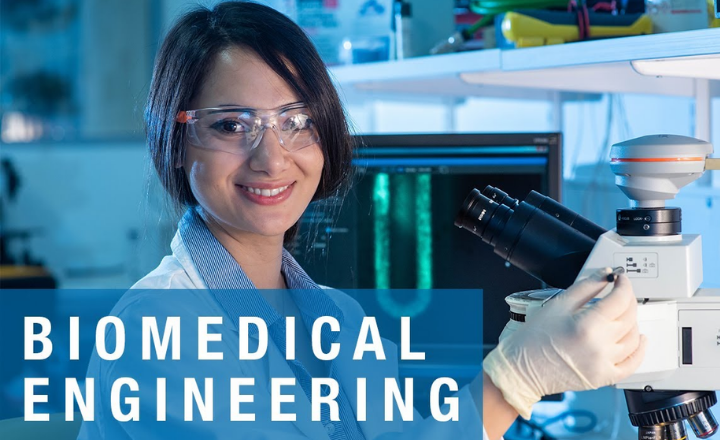
Biomedical engineering is an interdisciplinary field that applies engineering principles and design methods to biology and medicine to improve healthcare. It sits at the intersection of engineering, life sciences, and clinical medicine, using tools from mechanical, electrical, materials, and computer engineering to solve problems in diagnosis, monitoring, treatment, and rehabilitation.
Biomedical engineers design, develop, and test medical devices and systems such as imaging machines (MRI, CT, ultrasound), prosthetic limbs, artificial organs, pacemakers, dialysis equipment, and surgical robots.
They also work on biomaterials that can safely interact with the body, such as implants, stents, and tissue scaffolds, and they help create software and algorithms for medical data analysis, patient monitoring, and decision‑support systems. In hospitals and industry, they may manage and maintain medical equipment, ensuring it meets safety and performance standards.

Main areas and applications Key subfields include medical imaging, biomechanics, biomaterials, tissue engineering, neural engineering, bioinstrumentation, and rehabilitation engineering. Applications range from wearable health sensors and smart implants to regenerative medicine and AI‑assisted diagnostics, all aimed at improving healthcare accuracy, personalization, and accessibility.
Biomedical Engineering in 2026: Broadening Frontiers in Healthcare Innovation
In 2026, biomedical engineering has grown far beyond the traditional role of designing medical devices; it is now one of the fastest‑advancing interdisciplinary domains in global healthcare. By merging biology, clinical medicine, artificial intelligence, robotics, and cutting‑edge materials science, biomedical engineers are redefining how illnesses are detected, tracked, and managed. Their work enables more accurate, proactive, and patient‑centered care across hospitals, clinics, and home environments.
Advanced Medical Devices and Smart Implants
Biomedical engineers today create next‑generation smart implants such as pacemakers that adapt heart rhythms in real time using continuous physiological data. Artificial joints and prosthetic limbs have become lighter, more durable, and more responsive thanks to advanced biomaterials and embedded sensors. In 2026, many of these implants include wireless telemetry that sends vital signs and device performance directly to clinicians, cutting down on routine hospital visits and enabling earlier intervention when complications arise.
Wearable Health Technology and Remote Monitoring
Wearable health devices have evolved from basic fitness trackers into sophisticated medical tools. Engineers design medical‑grade wearables that continuously measure blood pressure, glucose, oxygen saturation, and even stress‑related biomarkers. These devices connect to AI‑powered platforms that can flag potential health risks before symptoms become severe. Remote monitoring has become particularly valuable in rural and underserved regions, helping bridge gaps in access to timely medical care.
3D Bioprinting and Regenerative Medicine
A major breakthrough in 2026 is the use of 3D bioprinting to create living tissues and experimental organ‑like structures. Biomedical engineers work alongside biologists to print skin grafts, cartilage, and mini‑organ models that can be used for drug testing and disease modeling. Advances in stem cell engineering also support regenerative therapies for damaged tissues, opening new pathways for treating conditions that were previously difficult or impossible to address.
Artificial Intelligence in Healthcare Design
Artificial intelligence is deeply integrated into biomedical engineering workflows. Machine‑learning models help design safer drug‑delivery systems, fine‑tune prosthetic behavior, and simulate how different treatments might affect individual patients. Using digital models of biological systems, researchers can reduce dependence on animal experiments and develop more targeted, personalized treatment strategies that align closely with a patient’s unique physiology.
Cost‑Effective and Sustainable Medical Solutions
In 2026, biomedical engineers place strong emphasis on affordability and sustainability. Many medical devices now use modular architectures, allowing components to be repaired or upgraded instead of replaced entirely. Low‑cost, portable diagnostic tools are being developed for low‑resource settings, helping to deliver equitable care in developing countries. Engineers are also streamlining manufacturing processes to cut waste, lower energy use, and reduce the environmental footprint of medical equipment.
Robotics and Surgical Innovation
Biomedical engineers collaborate closely with surgeons to develop robotic‑assisted surgical platforms. These systems enable minimally invasive procedures with higher precision, reduced tissue trauma, and faster recovery times. Advanced imaging and robotic instruments are now standard in many complex operations, leading to improved surgical outcomes, fewer complications, and shorter hospital stays.
Personalized Medicine and Precision Healthcare
Personalized medicine is a defining trend in 2026. Biomedical engineers build systems that combine genetic information, medical history, and real‑time monitoring data to generate tailored treatment plans. Drug‑delivery devices can now release medication in response to live biological feedback, ensuring the right dose at the right time and minimizing unwanted side effects.
What Do Biomedical Engineers Do?
Biomedical engineers act as a bridge between medicine and modern technology, working to turn scientific discoveries into practical healthcare solutions. Their primary aim is to develop safer, more intelligent, and efficient medical systems that enhance diagnosis, treatment, and patient recovery. Rather than depending only on conventional therapies, they focus on creating advanced tools and platforms that make care more precise, less invasive, and better adapted to individual patients.
Development of Minimally Invasive Technologies
A core responsibility of biomedical engineers is to design instruments and devices that lower the risks associated with surgery. They develop high‑precision surgical tools, laser‑based treatment systems, and microscale devices that allow clinicians to perform procedures through tiny incisions. This minimally invasive approach helps shorten hospital stays, lower the chances of infection, and improve overall comfort and recovery for patients.
Smart Monitoring and Data Integration
By 2026, patient monitoring has become highly intelligent and connected. Biomedical engineers build systems that continuously capture vital signs such as heart rate, oxygen saturation, and brain activity, then transmit this data securely to smartphones, tablets, or hospital networks. These automated platforms are widely used in intensive care units, home‑based care, and even in extreme settings like space missions or deep‑sea research stations, where real‑time health tracking is critical.
Assistive Robotics and Calibration Systems
Biomedical engineers design robotic systems that support surgeons during intricate operations, improving accuracy and reducing human error. These platforms must undergo rigorous calibration and testing to ensure they apply the right amount of force and respond correctly to surgeon inputs. Robotics is also applied in rehabilitation, where robotic exoskeletons and therapy devices help patients rebuild strength and mobility after injuries, strokes, or neurological disorders.
Computer Modeling and Biological Simulation
Using powerful computational tools, biomedical engineers create digital models of human physiology, such as cardiovascular regulation, kidney filtration, or neural signaling. These simulations allow researchers to study disease mechanisms, test hypothetical treatments, and optimize device performance without relying exclusively on animal or human trials. This approach accelerates discovery while improving safety and reducing experimental costs.
Artificial Organs and Tissue Engineering
Biomedical engineers play a key role in designing artificial organs, including synthetic kidneys, bioengineered blood vessels, and heart‑assisting devices. Working alongside biologists and clinicians, they use advanced biomaterials and regenerative techniques to build structures that can support, repair, or even replace damaged tissues. These innovations offer new options for patients with organ failure or severe tissue damage.
Innovation in Therapeutic and Diagnostic Devices
Engineers in this field continually refine medical imaging technologies—such as MRI, CT, and ultrasound—to produce sharper, more detailed images for accurate diagnosis. They also improve genomic and molecular testing platforms, making genetic analysis faster, more reliable, and more accessible. This progress supports personalized medicine, where treatments are customized based on a patient’s unique genetic makeup and health profile.
Drug Development and Delivery Systems
Beyond hardware, biomedical engineers contribute to how medications are formulated and delivered. They design smart drug‑delivery systems that release precise doses at specific times or in response to physiological signals, improving treatment effectiveness while limiting side effects. These systems can include implantable pumps, transdermal patches, and nanocarriers that target diseased cells more accurately.
Technical Support and Equipment Management
In clinical environments, biomedical engineers maintain, troubleshoot, and upgrade medical equipment to ensure it functions safely and reliably. They train healthcare staff on proper device use, interpret technical specifications, and help hospitals comply with safety and regulatory standards. Their behind‑the‑scenes work keeps life‑support systems, imaging machines, and monitoring devices running smoothly every day.
How is Biomedical Engineering Different?
Biomedical Engineering is distinct from other branches of engineering because its central purpose is to enhance human health and well-being. While it borrows concepts from mechanical, electrical, chemical, and computer engineering, its focus is specifically on addressing medical and biological problems rather than general industrial or infrastructure challenges.
Healthcare‑Centered Purpose
Unlike conventional engineering fields that may target buildings, machines, or energy networks, biomedical engineering is fundamentally oriented toward patient care. Every project, whether it involves designing a more responsive prosthetic limb, refining an imaging system, or creating a new monitoring device, is ultimately aimed at diagnosing, treating, or preventing disease. The underlying goal is always to improve health outcomes and daily quality of life for individuals.
Integration of Biology with Engineering
Biomedical engineers must master both life sciences and engineering principles. They study human anatomy, physiology, and cellular behavior in parallel with mathematics, mechanics, and systems design. For instance, when developing an artificial joint, they evaluate not only load‑bearing capacity and durability but also how the implant interacts with surrounding tissues and how the body will respond over time. This fusion of biological insight with technical design makes the discipline inherently interdisciplinary.
Focus on Medical Innovation By 2026,
biomedical engineering has moved well beyond basic medical‑device production. Engineers in this field contribute to protein characterization, tools for genetic research, regenerative therapies, and AI‑driven diagnostic platforms. Their work may include detecting cellular biomarkers for early disease identification or building systems that interpret large‑scale biological datasets to support clinical decision‑making.
Direct Impact on Human Lives
While many engineering disciplines influence society in broad, indirect ways, biomedical engineering often produces tangible, personal effects. Technologies such as advanced prosthetics, implantable sensors, and critical‑care life‑support equipment directly shape patient survival, mobility, and independence. Because of this, engineers in the field must adhere to rigorous safety standards and maintain a strong sense of ethical responsibility.
Collaboration with Healthcare Professionals
Biomedical engineers regularly collaborate with physicians, surgeons, nurses, and clinical researchers to ensure that new technologies address real‑world medical needs. They must understand clinical workflows, infection‑control protocols, and regulatory frameworks such as medical‑device certification. This close integration with healthcare settings sets the profession apart from more purely technical engineering roles.
Rapid Technological Evolution
Driven by progress in artificial intelligence, nanotechnology, and advanced biomaterials, biomedical engineering is one of the fastest‑changing engineering domains in 2026. The field continuously adapts cutting‑edge technologies for medical use, from smart implants and wearable diagnostics to lab‑on‑a‑chip systems and AI‑assisted imaging. This constant innovation makes it one of the most dynamic and forward‑looking engineering careers today.
What Careers Are There in Biomedical Engineering?
Biomedical Engineering opens diverse career opportunities for students who want to drive transformative medical technologies. By 2026, the field has grown substantially thanks to rapid progress in artificial intelligence, robotics, nanotechnology, and regenerative medicine, creating many specialized roles that sit at the intersection of engineering and healthcare.
Biomedical Electronics
Biomedical electronics professionals design, maintain, and ensure the safe use of medical equipment in hospitals and research labs. They often train clinical staff on how to operate complex devices such as patient monitors, infusion pumps, and diagnostic machines. Their work guarantees that equipment performs accurately, reliably, and in line with strict safety and regulatory requirements.
Bioinstrumentation
Bioinstrumentation specialists blend electronics with measurement science to build tools that support diagnosis and treatment. They develop sensors, monitoring systems, and analytical instruments that capture biological signals like heart rhythms, brain activity, and blood composition. These technologies are essential for early disease detection and for enabling more precise, data‑driven healthcare.
Biomechatronics
Biomechatronics brings together biology, mechanics, and electronics to create intelligent assistive systems. Engineers in this area design robotic prosthetics, exoskeletons, and neuro‑controlled devices that help people regain movement after injury, congenital conditions, or neurological damage. By 2026, many of these systems incorporate artificial intelligence to adapt behavior to individual users in real time.
Bionics
Bionics concentrates on restoring or augmenting natural body functions through engineered solutions. Examples include artificial limbs that provide sensory feedback and vision‑support devices for people with visual impairments. The goal is to closely mimic or enhance human capabilities using advanced materials, sensors, and control systems.
Clinical Engineering
Clinical engineers work inside healthcare institutions, managing the full lifecycle of medical technologies. They assess new equipment before purchase, oversee installation and maintenance, and ensure devices operate safely and efficiently. Their role connects clinical needs with technical innovation, helping hospitals adopt new technologies without compromising patient safety.
Medical Imaging
Medical imaging specialists focus on improving technologies that visualize internal body structures. They refine imaging systems to produce higher‑resolution, faster, and safer scans while reducing radiation exposure where possible. Advances in imaging directly support more accurate diagnoses, better surgical planning, and improved treatment monitoring.
Rehabilitation Engineering
Rehabilitation engineers design technologies that support people with physical disabilities. They create mobility aids, therapeutic devices, and adaptive tools that help patients regain independence and participate more fully in daily life. Their work often combines mechanical design, electronics, and user‑centered design principles.
Systems Physiology
Engineers in systems physiology study how different organs and biological systems interact as a whole. Using computational models, they analyze processes such as cardiovascular regulation, respiratory control, and neural communication to understand disease mechanisms and refine treatment approaches. This systems‑level view helps guide the design of more effective medical devices and therapies.
Bionanotechnology
Bionanotechnology operates at the molecular and nanoscale level, where engineers design tiny materials and devices for medical use. They develop nanocarriers for targeted drug delivery, nanosensors for early disease detection, and nanostructured scaffolds for tissue repair. This area is one of the fastest‑growing segments of biomedical engineering in 2026.
Neural Engineering
Neural engineers create technologies that interface with the nervous system. Their work includes brain‑computer interfaces, neural implants, and electrical stimulation devices used to treat conditions such as epilepsy, Parkinson’s disease, and spinal‑cord injuries. By 2026, these systems are becoming more precise, safer, and better integrated with the body’s own neural circuits.
Biomaterials Engineering
Biomaterials engineers research and develop materials that can safely interact with living tissues. They design implants, prosthetics, and scaffolds for tissue engineering, focusing on biocompatibility, mechanical strength, and long‑term durability inside the human body. Their innovations are crucial for devices that must remain functional for years without causing adverse reactions.
Cellular, Tissue, and Genetic Engineering
This specialized area tackles biomedical problems at the cellular and genetic level. Engineers in this field work on regenerative therapies, engineered tissues, and gene‑editing techniques aimed at correcting inherited disorders and managing chronic diseases. Their research supports the development of next‑generation treatments that target the root causes of illness rather than just the symptoms.
What Skills Do Biomedical Engineers Need?
Biomedical engineering is a challenging yet highly rewarding discipline that calls for a balanced mix of scientific understanding, analytical reasoning, and creative thinking. As healthcare becomes more technology‑driven and data‑intensive in 2026, biomedical engineers must cultivate a broad skill set to remain effective and competitive in a rapidly evolving landscape.
Strong Foundation in Science and Mathematics.
A deep grasp of chemistry, biology, physics, and higher‑level mathematics is fundamental. Biomedical engineers use these subjects to model how organs and tissues function, design safe and effective medical devices, and interpret complex biological phenomena. Proficiency in calculus, statistics, and differential equations supports the creation of accurate physiological models and the analysis of experimental and clinical data.
Problem‑Solving and Critical Thinking
The ability to define problems clearly and devise practical, evidence‑based solutions is central to this field. Whether optimizing artificial organs, refining patient‑monitoring systems, or improving surgical lasers, biomedical engineers must assess risks, weigh trade‑offs, and develop solutions that are both innovative and clinically safe. Logical reasoning and structured decision‑making are key to turning ideas into reliable medical technologies.
Technical and Engineering Skills
Biomedical engineers must be comfortable with core engineering domains such as electronics, mechanics, programming, and materials science. In 2026, competence in simulation software, data‑analysis platforms, and 3D‑design tools is increasingly important. Many professionals also work with robotics, artificial intelligence, and biomedical sensors, requiring hands‑on experience with both hardware and software systems.
Research and Analytical Skills
Because much of the work involves research and product development, engineers must be able to design experiments, collect data, and refine prototypes based on results. They need to analyze biological signals, validate device performance, and interpret statistical outcomes to ensure that their designs meet clinical and regulatory requirements. Strong analytical skills help minimize uncertainty and improve the reliability of medical technologies.
Communication and Teamwork
Biomedical engineers routinely collaborate with physicians, surgeons, nurses, and other healthcare professionals. They must translate complex technical concepts into clear, accessible language for non‑engineers and understand clinical workflows and patient‑safety needs. Effective written and verbal communication is essential for writing reports, presenting findings, and functioning productively in multidisciplinary teams.
Creativity and Innovation:
Healthcare problems often demand novel approaches, so creativity is a vital asset. Engineers must think outside standard frameworks when designing advanced therapies such as laser‑based eye treatments, intelligent prosthetics, or wearable diagnostic systems. The capacity to generate original ideas and adapt emerging technologies to medical needs drives progress in patient care and medical technology.
Attention to Detail and Ethical Awareness.
Since biomedical devices directly influence human health and safety, precision and responsibility are paramount. Engineers must adhere to strict regulatory standards, quality‑control protocols, and ethical guidelines throughout the design and testing process. Even small oversights can have serious consequences, so thorough testing, documentation, and risk assessment are essential components of their work.
Where Do Biomedical Engineers Work?
Biomedical engineers enjoy a wide range of workplace options because their skills sit at the intersection of healthcare, technology, and scientific research. By 2026, demand for these professionals continues to rise, spanning established medical settings as well as fast‑growing technology and innovation sectors.
Hospitals and Healthcare Institutions Many biomedical engineers are employed directly in hospitals, clinics, and specialized medical centers. In these environments, they oversee the installation, maintenance, and performance evaluation of medical equipment to ensure patient safety and smooth clinical operations. They often work alongside physicians, nurses, and technicians to introduce and integrate new technologies into everyday care, supporting advanced imaging systems, life‑support devices, and continuous‑monitoring platforms.
Medical Device Manufacturing Companies
A large number of biomedical engineers work in firms that design, build, and commercialize medical devices. These companies develop products such as prosthetics, surgical instruments, imaging machines, wearable monitors, and implantable systems. Engineers in this sector focus on product design, prototyping, rigorous testing, quality assurance, and compliance with regulatory requirements before devices are approved for clinical use.
Research and Development Organizations
Biomedical engineers are also active in research institutes, university laboratories, and innovation hubs that focus on medical and biological technologies. In 2026, many work in multidisciplinary teams combining biotechnology, artificial intelligence, and regenerative medicine. Their projects may involve improving drug‑delivery platforms, investigating disease mechanisms, or creating next‑generation diagnostic tools and therapeutic devices.
Biotechnology and Tech Start‑ups
Digital‑health, robotics, AI‑driven diagnostics, and wearable‑technology start‑ups increasingly recruit biomedical engineers to drive rapid innovation. These dynamic companies emphasize fast prototyping, iterative design, and agile development of novel healthcare solutions. Engineers in start‑ups often take on broad responsibilities, spanning concept development, hardware and software design, testing, and even early‑stage clinical validation.
Sports and Athletic Performance Companies
Some biomedical engineers contribute to sports medicine and performance technology firms. They help design protective gear, rehabilitation equipment, motion‑analysis systems, and injury‑prevention tools. Their work supports elite athletes, amateur sportspeople, and patients in physical therapy by enhancing performance, reducing injury risk, and speeding recovery.
Medical Laboratory Design and Optimization Firms
Biomedical engineers may also work for companies that plan and optimize medical laboratories. They design laboratory layouts, select specialized instrumentation, and ensure that facilities meet safety, workflow, and regulatory standards. This role blends engineering expertise with knowledge of clinical processes and healthcare infrastructure planning.
Government and Regulatory Agencies
In 2026, biomedical engineers are employed by national and international regulatory bodies and public‑health agencies. They review new medical technologies, assess safety and efficacy, and help shape policies and standards for medical devices and digital‑health tools. Their input supports evidence‑based regulation and the safe, ethical introduction of innovative healthcare products.
Conclusion
Biomedical engineers operate across a broad spectrum of environments, including hospitals, research centers, device manufacturers, technology start‑ups, sports organizations, and government agencies. Their interdisciplinary background enables them to contribute wherever engineering meets healthcare, making the profession both versatile and deeply influential in shaping the future of medicine.