
Water Carriage System
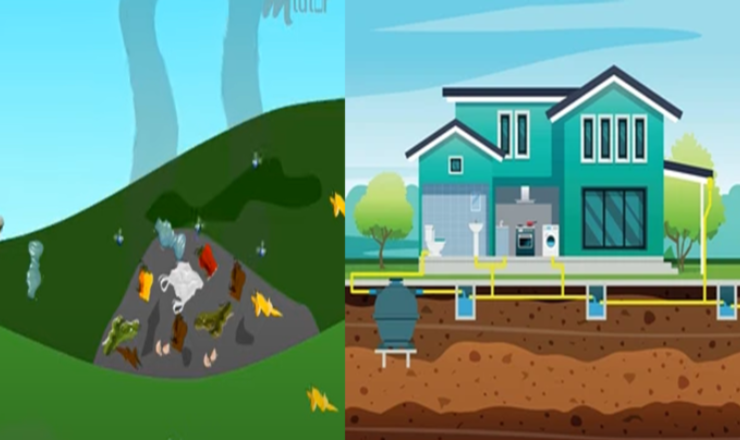
The water carriage system is the modern method of conveyance of sewage. In this system, water is used as a medium for conveying the sewage to the treatment plant and final disposal.
Imagine living in a town where waste is still collected by hand, carried in buckets, and dumped far from homes. Now contrast that with a modern city where you flush the toilet, and waste disappears into an underground system, never to be seen again.
The conservancy system and water carriage system are two traditional methods of sanitation for handling human waste and refuse. The conservancy system is an outdated, dry method, while the water carriage system is a modern, water-based approach.
What is the Conservancy System?
This traditional system relies on human labour. Human waste, also known as ‘night soil,’ is manually collected in containers like pans or pails and transported manually by workers. Solid waste is placed in dustbins and moved using handcarts or vans, while wastewater travels through open or closed drains.
Method # 1: Conservancy System
- This old system collects night soil, garbage, and other wastes separately in vessels, pits, or privies, then removes them manually or by carts at least once daily. It is unhygienic, promotes disease spread through open transport, and requires significant labor.
- Sometimes, this system is also referred to as a dry system. This system has been in practice for very ancient times. Actually, this is an outdated system, even though it is still prevalent in small towns, villages, and undeveloped portions of large cities.
- Various types of refuse and stormwater are collected, conveyed,and disposed of separately by different methods in this system; therefore, it is called a conservancy system.
- Garbage or dry refuse of a town is collected in dustbins placed along the roads and streets, from where it is conveyed by trucks or covered carts once or twice in a day to the point of disposal. All the non-combustible portions of the garbage such as sand, dust, clay, ashes etc. are used for filling the low level areas to reclaim land for the further development of the town.
- The combustible portion of garbage such as dry leaves, waste paper, broken furniture etc. are burnt. The decaying fruits and vegetables, grass and other such things are first dried and then disposed of by burning or in the manufacture of manure.
ADVERTISEMENTS:
Human Excreta or Night Soil is collected separately in privies or conservancy latrines. The liquid and semi-liquid wastes are collected in separate drains of the same latrine, from where they are removed through human agency. After removal night soil is taken outside the town in closed animal drawn carts, trucks or tanks mounted on the tractor trailors. The night-soil is buried in trenches.
After 2-3 years the buried night soil is converted into an excellent manure which can be used for growing crops. There are other methods also for the disposal of human excreta.
In conservancy system the Sullage and Storm waters are also carried separately in closed or open drains, up to the point of disposal, where they are allowed to mix up with streams, rivers or sea without any treatment. Sometimes sullage is used for individual gardening or farming on large scale.
ADVERTISEMENTS:
The following are the merits of conservancy system:
(i) It is cheaper in initial cost because storm water can pass in open drains and conservancy latrines are much economical.
(ii) The quantity of sewage reaching at the treatment plant before disposal is low.
(iii) As the storm water goes in open drains, the sewer section will be small and will run full for the major portion of the year, due to which there will be no silting and deposits in sewer-lines,
ADVERTISEMENTS:
(iv) In floods if the water level of river rises at the out-fall, it will not be costly to pump the sewage for disposal.
Demerits:
The following are the demerits of conservancy system:
(i) It is possible that storm water may go in sewers causing heavy load on treatment plants, therefore it is to be watched.
ADVERTISEMENTS:
(ii) In crowded lanes it is very difficult to lay two sewers or construct road-side drains, causing great inconvenience to the traffic.
(iii) For burying human excreta more space of land is required,
(iv) Buildings cannot be designed as one compact unit, because latrines are to be provided away from the living rooms due to foul smell, which are also inconvenient,
(v) There is every possibility that liquid refuse may get access in the subsoil and pollute the underground water,
ADVERTISEMENTS:
(vi) In the presence of a conservancy system, the aesthetic appearance of the city cannot be increased.
(vii) Decomposition of sewage causes insanitary conditions, which are dangerous to public health.
(viii) This system completely depends on the mercy of sweepers at all times. If the sweepers go on strike, there is every possibility of the spread of diseases in the town due to the decomposition of foul matter
Where is it used?
You will find this system in older towns or rural areas where water and underground drainage systems are limited or unavailable.
The Conservancy System and Water Carriage System are two traditional approaches to sewage collection and disposal. The Conservancy System is an older, manual method, while the Water Carriage System is a modern, water-based method used in urban sanitation.
- Rural India: Villages use pit latrines and manual scavenging for night soil, despite bans.
- Parts of rural Bangladesh: Open defecation and pail systems in flood-prone villages.
- Rural sub-Saharan Africa (e.g., Ethiopia villages): Pit privies with manual emptying due to poor roads.
- Haiti rural areas: Bucket latrines post-disasters, carried by hand.
- Rural Pakistan: Conservative pail systems in water-scarce Khyber Pakhtunkhwa villages.
- Nepal remote hills: Dry pits with periodic manual removal.
- Madagascar countryside: Traditional pail collection in off-grid areas.
- Rural Yemen: Manual waste handling amid water shortages.
- Somalia nomadic camps: Portable pits emptied by hand.
- North Korea rural zones: Reported pail systems for manure reuse in farming.
Advantages of the Conservancy System
- Low installation cost
- Requires very little water
Disadvantages of the Conservancy System
- Unhygienic and causes foul smells
- Manual handling risks workers’ health
- Pollutes soil and groundwater
- Toilets must be located outside the house
Due to these issues, this system is rarely used in modern sanitation planning.
What is the Water Carriage System?
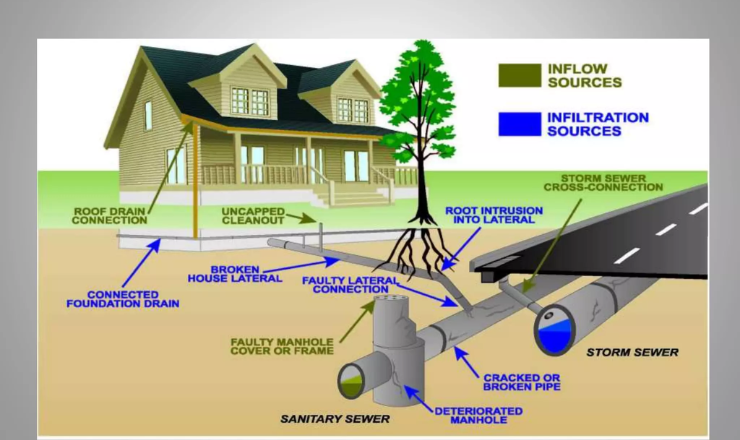
This modern method uses water to transport waste through a network of underground sewers to treatment facilities. Toilets are flushed with 5–10 litres of water, and waste is safely carried away through pipelines.
Method # 2: Water Carriage System
With the development and advancement of the cities, urgent need was felt to replace conservancy system with some more improved type of system in which human agency should not be used for the collection and conveyance of the sewage.
After large number of experiments, it was found that the water is the only cheapest substance, which can be easily used for the collection and conveyance of sewage.
As in this system water is the main substance, therefore it is called Water-Carriage System. In this system the excremental matters are mixed up in large quantity of water and are taken out from the city through properly designed sewerage systems, where they are disposed off after necessary treatment in a satisfactory manner.
The sewage so formed in water carriage system consists of 99.9 per cent of water and the remaining 0.1 per cent of solid matters. All these solids remain in suspension in the sewage and do not change the specific gravity of the water; therefore all the hydraulic formulae can be directly used in the designing of sewerage systems and the treatment plants.
Merits:
The following are the merits of water carriage system:
(i) It is hygienic method, because all the excremental matters are collected and conveyed by water only and no human agency is employed for it.
(ii) There is no nuisance in the streets of the towns due to offensive matters, because all the sewage goes in closed sewers under the ground. The risk of epidemics is reduced.
(iii) As only one sewer is laid, therefore it occupies less space in crowded lane,
(iv) Due to more quantity of sewage, self-cleansing velocity can be obtained even at less gradients.
(v) Buildings can be designed compact as one unit.
(vi) The land required for the disposal work is less as compared with conservancy system in which more area is required for burying the excremental matters.
(vii) The usual water supply is sufficient and no additional water is required in water carriage system.
(viii) This system does not depend on manual labour at every time except when sewers get choked.
(ix) Sewage after proper treatment can be used for various purposes.
Demerits:
The following are the demerits of water carriage system:
(i) This system is very costly in initial cost.
(ii) The maintenance of this system is also costly.
(iii) During monsoon large volume of sewage is to be treated whereas very small volume is to be treated in the remaining period of the year.
If both the merits and demerits of the water-carriage system are considered, we will reach at the result that this system is an essential amenity, which every city must have.
Where is it used?
It is widely adopted in cities, residential colonies, hospitals, schools, and industrial areas where continuous water supply and sewer space are available.
Water carriage systems offer superior hygiene and efficiency compared to conservancy systems, which rely on manual waste handling. Below is a detailed comparison across 20 key points, drawn from standard sanitary engineering principles discussed in prior sources.
System Comparison Table
| Aspect | Conservancy System | Water Carriage System |
|---|---|---|
| 1. Building Design | Does not permit compact designs; toilets outside. | Permits compact indoor building designs. |
| 2. Hygiene Level | Non-hygienic; visible waste handling. | Highly hygienic; no human contact with waste. |
| 3. Land for Treatment | Requires large area for disposal. | Needs minimal area post-treatment. |
| 4. Labor Requirements | High; manual collection intensive. | Low; automated flow minimal oversight. |
| 5. Epidemic Risk | High chance of disease outbreaks. | Risk greatly reduced by enclosed transport. |
| 6. Water Pollution | Pollutes groundwater easily. | Minimal risk with proper sewers. |
| 7. Water Usage | Very low quantity needed. | Requires large continuous supply. |
| 8. Initial Cost | Low and cheap to install. | High due to sewers and infrastructure. |
| 9. Maintenance Skills | No skilled labor or tech needed. | Requires skilled technicians. |
| 10. Suitability | Rural or undeveloped areas. | Urban and developed areas. |
| 11. Odor/Nuisance | Causes foul smells on streets. | No street nuisances or odors. |
| 12. Waste Removal | Manual carts or buckets nightly. | Automatic via water flow in pipes. |
| 13. Worker Health Risk | High exposure to pathogens. | Negligible direct handling risks. |
| 14. Aesthetics | Poor; unsightly external latrines. | Neat, indoor facilities enhance appearance. |
| 15. Self-Cleaning | None; frequent manual cleaning. | Achieves self-cleaning velocities. |
| 16. Sewage Reuse Potential | Limited due to contamination. | Treated effluent often reusable. |
| 17. Installation Time | Quick and simple. | Lengthy due to underground works. |
| 18. Street Disruption | Minimal during setup. | Causes digging and traffic issues. |
| 19. Flexibility | Easily adaptable in low-resource settings. | Fixed once sewers laid; hard to alter. |
| 20. Long-Term Cost | High ongoing labor costs. | Lower operational but high upfront amortized. |
Conclusion
The shift from conservancy to water carriage systems marks a major leap in sanitation planning. While the conservancy system may still exist in some places, its health risks make it unsuitable for modern needs. The water carriage system, though costlier, ensures hygiene, safety, and sustainability,especially when the right type is chosen based on local conditions.