
Computer Science (CS) and Computer Engineering (CE) are closely related fields, but differ in focus.
Computer Science and Computer Engineering are often used interchangeably, but they are distinct fields with different areas of focus. Understanding the difference between the two is important for students who are planning a career in technology, especially as digital systems continue to advance rapidly.
Computer engineering applies electrical engineering principles to design and build computer hardware and to integrate it with software. Computer engineering students learn to design circuits, embedded systems, and processors, ensuring that hardware and software work together.
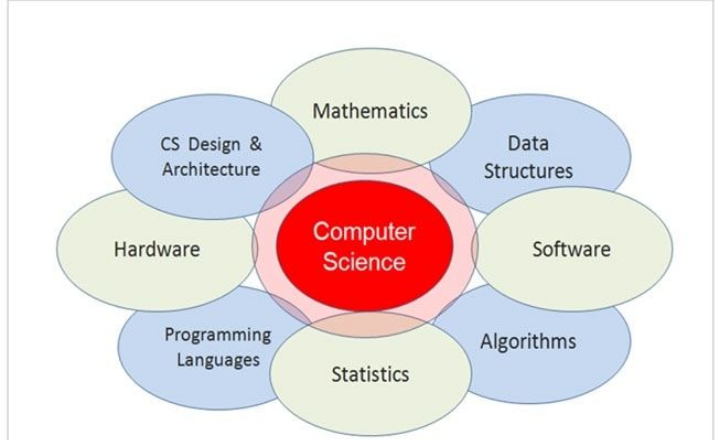
Computer Science, by contrast, emphasizes the theory and practice of computation and software. CS students study algorithms, data structures, programming languages, and the theoretical foundations of computing.
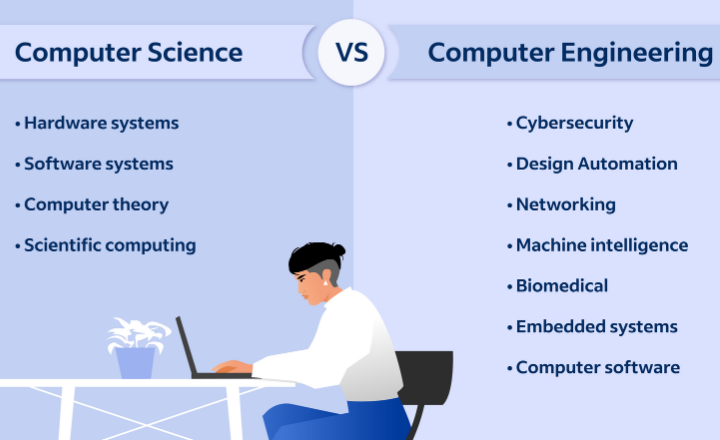
One way to see the difference is that Computer engineering is often described as hardware-oriented (designing chips, devices and control systems), while Computer Science is software-oriented (designing applications, systems, and algorithms).
Computer Science vs. Computer Engineering(2026 )
Computer Science primarily focuses on software and computational problem-solving. It involves writing efficient code, developing algorithms, working with data structures, and building applications that power modern technologies such as artificial intelligence, machine learning, data analytics, and cloud platforms.
Computer science professionals typically design software systems and intelligent solutions that solve complex real-world problems, from recommendation engines to autonomous decision-making systems.
Computer Engineering, in contrast, sits at the intersection of computer science and electrical engineering. It emphasizes how computing systems are built and how hardware and software work together. Computer engineers design and develop processors, embedded systems, communication hardware, and smart devices such as smartphones, sensors, and robotics systems.
In 2026, with the rapid growth of technologies like the Internet of Things (IoT), autonomous systems, and smart infrastructure, computer engineering plays a critical role in shaping modern digital hardware.
Because universities use different program structures and terminology, and some institutions combine both fields into a single department, students often find it difficult to distinguish between them.
| Aspect | Computer Science (CS) | Computer Engineering (CE) |
|---|---|---|
| Main Focus | Software, programming, algorithms, and data | Hardware–software integration and system design |
| Core Subjects | Programming, Data Structures, Algorithms, AI, Machine Learning, Databases | Digital Logic, Microprocessors, Embedded Systems, Computer Architecture, Networking |
| Hardware Involvement | Minimal | Strong focus on hardware and electronics |
| Software Development | High (apps, web, AI systems, software platforms) | Moderate (firmware, embedded software, system-level coding) |
| Mathematics Level | Discrete math, statistics, linear algebra | Advanced math, signals, electronics, and physics |
| Common Tools | Python, Java, C++, SQL, TensorFlow, cloud platforms | C/C++, Verilog, VHDL, MATLAB, microcontrollers |
| Typical Job Roles | Software Engineer, Data Scientist, AI Engineer, Web Developer | Embedded Systems Engineer, Hardware Engineer, IoT Engineer |
| Industries | Software companies, AI startups, finance, healthcare, tech platforms | Robotics, IoT, automotive, telecom, hardware manufacturing |
| Career Trend (2026) | Very high demand due to AI, data, and cloud growth | High demand with growth in IoT, robotics, and smart devices |
| Who Should Choose It? | Students who enjoy coding, logic, and problem-solving | Students interested in hardware, electronics, and system design |
What Is Computer Science?
Computer Science is a discipline centered on the theory, design, and application of computation. It focuses primarily on the software side of computing, exploring how data is processed, stored, and transformed using algorithms and logical structures.
Strongly rooted in mathematics and analytical thinking, computer science applies abstract concepts to develop practical solutions for real-world problems across industries.
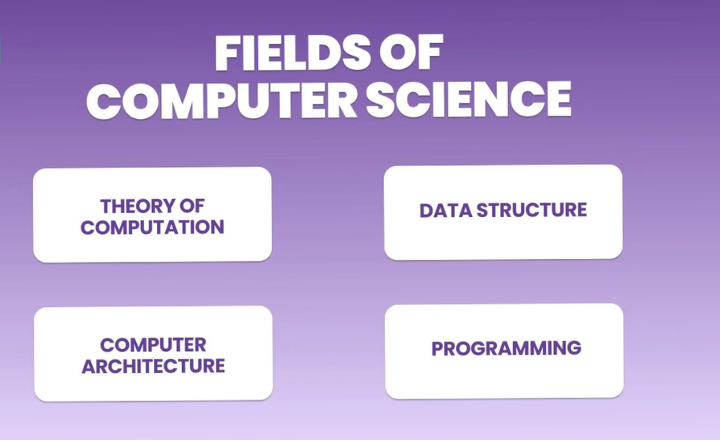
Rather than concentrating on physical hardware components, computer science emphasizes programming, algorithms, data structures, artificial intelligence, machine learning, cybersecurity, and software systems. Professionals in this field design and optimize software that powers everything from mobile applications and cloud platforms to autonomous systems and large-scale data networks.
A typical computer science degree program covers a broad range of foundational and advanced subjects, including algorithm analysis, operating systems, database systems, computer architecture, and software engineering. Students also gain an understanding of how hardware and software interact through courses in computer organization and system design, ensuring a well-rounded technical foundation.
As technology continues to evolve in 2026, computer science remains one of the most versatile and in-demand fields, offering career opportunities in software development, artificial intelligence, data science, research, and emerging digital technologies.
For students interested in logic-based problem-solving, innovation, and building intelligent systems, computer science offers a strong, future-proof academic pathway.
What Is Computer Engineering?
Computer Engineering is a multidisciplinary field that combines principles of computer science and electrical engineering to design, develop, and optimize computing systems. Unlike computer science, which focuses mainly on software, computer engineering emphasizes the integration of hardware and software, ensuring that digital systems operate efficiently, reliably, and at scale.
This field focuses on how computers are physically built and how software interacts directly with hardware components. Computer engineers work on processors, microcontrollers, embedded systems, networking hardware, robotics, and smart devices.
In 2026, computer engineering plays a vital role in emerging technologies such as the Internet of Things (IoT), autonomous systems, artificial intelligence hardware, smart infrastructure, and high-performance computing.
Computer engineering degree programs typically include coursework in digital logic design, computer architecture, microprocessors, embedded systems, electronics, signal processing, and systems programming. Students also study software development and operating systems to understand how hardware-level decisions affect system performance and functionality.
As technology continues to move toward smarter and more connected systems, computer engineering offers strong career opportunities in industries such as semiconductors, telecommunications, robotics, automotive systems, aerospace, and consumer electronics.
For students interested in understanding how computers work at the lowest level and how hardware and software come together to power modern technology, computer engineering provides a challenging and highly rewarding career path.
Computer Engineering vs. Computer Science: A 2026 Career Guide
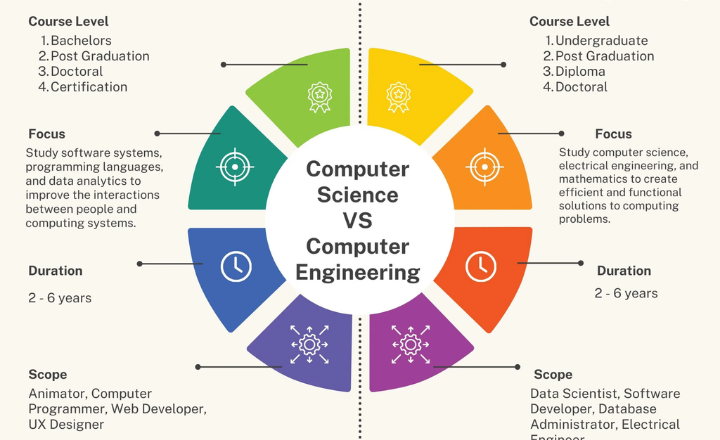
CE students learn to design circuits, embedded systems, and processors, ensuring that hardware and software work together. Computer Science, by contrast, emphasizes the theory and practice of computation and software.
Academic Curriculum
Computer Science programs tend to be math- and software-heavy. Core courses include multiple programming languages, data structures, algorithms, discrete mathematics, theory of computation, operating systems, and databases.
CS students also often take electives in areas like artificial intelligence, cybersecurity, graphics, or machine learning. The math curriculum emphasizes discrete math, probability and sometimes linear algebra or calculus, depending on the program. In general, CS curricula develop strong skills in logical and abstract thinking.
Computer Engineering programs bridge electrical engineering (EE) and computer science. In addition to programming and algorithms, CE students take many hardware- and physics-oriented courses. Typical CE coursework includes digital logic and circuit design, microprocessor/microcontroller engineering, embedded systems, analog electronics, signal processing, and hardware description languages (e.g. Verilog/VHDL).
They also study related physics (often electromagnetics) and advanced math (calculus, differential equations) to understand hardware behavior. While CE majors still learn software development (often C/C++ for embedded, as well as operating systems and networks), they spend more time in labs building and testing physical systems.
In summary, CS curricula focus more on software theory and programming, whereas CE curricula blend software with substantial hardware and electronics courses.
Key Technical Skills Developed
- Computer Science: Students build strong programming and software design skills. By graduation, they typically know several languages (e.g. Python, Java, C++, etc.) and understand data structures, algorithms, and software architecture.
They learn to model and solve abstract problems, design databases, develop user interfaces, and work with systems software. CS training emphasizes logical problem-solving and theoretical analysis.
Graduates gain skills in writing efficient code, debugging, and working with modern software tools. They also learn areas like machine learning, cybersecurity, or HCI, depending on electives. Overall, CS develops expertise in coding, algorithms, mathematical reasoning, and data analysis. - Computer Engineering: In addition to programming, CE students develop hardware-related skills. They learn to design and test digital circuits, program microcontrollers and FPGAs, and integrate sensors or networks into devices.
They become proficient in low-level programming (often C, C++ or assembly) and using electronic design tools. CE graduates understand how software runs on hardware and can optimize systems for performance, power and cost.
Coursework and labs cultivate skills in system integration, debugging hardware systems, and applying EE concepts (signals, power, electromagnetics). In sum, CE graduates know software development and have a strong foundation in hardware design and testing, giving them a broad set of technical skills.
Common Career Paths
Computer Science graduates tend to pursue software-centric roles. Common job titles include Software Developer/Engineer (building applications, systems or web services), Web or Front-End Developer, Systems Analyst, Database Administrator, DevOps Engineer, and IT Consultant.
They also work as Data Scientists/Analysts, Machine Learning Engineers, or Cybersecurity Analysts. Mid- to senior-level roles include Software Architect, Technical Lead, or IT Manager. Many CS graduates work in sectors like software, finance, healthcare, gaming, or government.
For example, popular positions for CS majors include software/web developers, data scientists, and security specialists. The field is broad: almost any industry that uses software needs computer scientists, so graduates find jobs at tech companies (Microsoft, Google, Apple, startups, etc.), as well as in banking, consulting, aerospace, and more.
Computer Engineering graduates often work in hardware-oriented or integrated roles. Typical titles are Computer Hardware Engineer, Embedded Systems Engineer, Firmware Engineer, and Circuit Design/Hardware Design Engineer. They may become Robotics Engineers, Network Hardware Engineers, Systems Integration Engineers, or Electronics Engineers.
CE graduates might also serve as Systems Architects or Field Application Engineers who bridge hardware and software. In many cases, CE roles involve designing physical computing products (chips, IoT devices, telecom equipment, automotive systems, etc.).
For instance, jobs with a CE degree include hardware/circuit design engineers, embedded software engineers, and robotics engineers. Some CE graduates also work in purely software roles or in IT hardware support, but their training is most valued in industries where electronic hardware matters (see below).
Example roles by discipline (not exhaustive):
- Computer Science: Software Developer, Web Developer, Mobile App Developer, Systems Administrator, Database Administrator, Data Scientist, Cybersecurity Analyst, IT Consultant, Research Scientist (CS), Cloud Engineer, etc.
- Computer Engineering: Computer/Hardware Engineer, Embedded Systems Engineer, FPGA/ASIC Designer, Network Systems Engineer, Robotics Engineer, Test/Quality Engineer (hardware), Firmware Engineer, Electronics Engineer, etc.
Industries and Employers
Because software is ubiquitous, computer scientists work in almost every industry. Major employers include technology companies (FAANG-style firms and startups), financial services (banks, trading firms), healthcare (medical software), retail/e-commerce, entertainment (games, media tech), education, government agencies, and more.
According to U.S. data, about 30% of software developers work in computer systems design and related services, 10% in finance/insurance, 9% in software publishing, 8% in manufacturing, and the rest in diverse sectors.
Other high-employment industries for CS roles include consulting, academia, and government IT.
In general, CS roles can be found at any company that needs software, for example, Google or Amazon hire software engineers, banks hire developers and analysts, and automakers hire software teams for car systems.
Computer engineers are concentrated in the hardware and electronics sectors.
The largest employers of hardware engineers are semiconductor and electronic component manufacturers (~21% of jobs), R&D labs (~17%), computer systems design services (~16%), plus notable hiring by the federal government (e.g. defense labs, ~7%).
In practice, CE graduates may work for chip makers (Intel, AMD, Nvidia, Qualcomm, etc.), telecom and networking companies (Cisco, Ericsson), consumer electronics firms (Apple, Samsung), automotive companies (for car electronics), aerospace/defense contractors (Lockheed Martin, Boeing, Raytheon), industrial automation firms, and specialized hardware startups.
They also work in companies that design embedded systems (such as medical device manufacturers or smart appliance companies).
CE graduates often end up in industries producing physical computing devices, for example, mobile phones, networking gear, robotics, industrial machines, or IoT products, where their hardware and integration expertise are needed.
Salaries and Job Market Outlook (2026)
Both fields offer strong salaries and growth prospects as of the mid-2020s. In the U.S., recent data show:
- Computer Science / Software roles: Software developers had a median annual wage of about $133,000 (May 2024). Specialized roles (e.g. data scientists, security experts) often command similar or higher pay. Entry-level salaries for CS-related graduates (class of 2025) averaged around $76,000.
The job market for software and IT occupations is very strong: BLS projects around 15–16% growth for software developers (2024–34) and even faster (~23%) for high-end CS/IT research roles. Demand is fueled by expanding fields like AI, cloud computing, data analysis and cybersecurity. - Computer Engineering / Hardware roles: Computer hardware engineers had a median pay of about $155,000 (May 2024). (Median for broader “computer engineers” may be slightly lower; data science.
In any case, hardware specialists often earn in the $120k–$160k range.) For new CE grads, starting salaries were among the highest of engineering majors (around $82,500 in 2025).
The hardware job market is smaller; BLS projects roughly 7% employment growth for hardware engineers (2024–34). This is still faster than average, but slower than the software sector’s growth. Overall demand remains healthy because almost every high-tech device needs hardware expertise, though CE jobs can be more specialized.
Salary ranges overlap, but hardware-focused roles (CE) often start and top out slightly higher due to specialization, while software roles (CS) offer a broader number of positions. Both fields pay well by national standards and show robust job prospects, though software roles are growing faster overall.
Pros and Cons
- Computer Science – Pros: Wide variety of high-paying job opportunities in many industries (technology, finance, healthcare, etc.), especially in software development, data, and security. Flexible skill set (most CS grads can pivot to many tech roles). Often strong theoretical and problem-solving foundations that apply across fields. Generally abundant internships and entry-level positions at major tech companies.
- Computer Science – Cons: Very competitive field with many graduates vying for jobs. Curriculum can be math- and theory-heavy (challenging for those less inclined toward abstract concepts). Rapid tech change requires constant learning to stay current. Pure software focus means less exposure to hardware, which may limit some career options.
- Computer Engineering – Pros: Unique combination of hardware and software skills opens doors in multiple areas. Graduates can work on tangible products (chips, devices, robots) as well as software that interacts with hardware. Often perceived as more “engineer” role with design and building aspects. Strong starting salaries and opportunities in engineering sectors (semiconductors, embedded systems, aerospace, etc.).
- Computer Engineering – Cons: Rigorous curriculum combining CS and EE subjects makes for heavy course load. Fewer total job openings than pure software (since the field is more specialized). Some CE roles may require security clearances or professional licensing (in certain countries). May have to focus on narrow industries (hardware/embedded) rather than broad tech.
Computer Science Courses
1. Design and Analysis of Algorithms
Students learn how to measure and compare algorithm efficiency using tools such as Big‑O notation, recurrence relations, and amortized analysis. They also practice designing and implementing algorithms for problems like sorting, searching, graph traversal, and dynamic programming, while reasoning about correctness and performance trade‑offs.
2. Introduction to Operating Systems
This course explains how an operating system manages hardware and software resources so programs can run reliably and efficiently. Topics include process and thread scheduling, memory management, file systems, concurrency, synchronization, and basic distributed services such as remote procedure calls.
3. Software Engineering
Students learn how to build real‑world software in teams, using systematic methods instead of just writing isolated programs. The course covers requirements gathering, design patterns, testing strategies, version control, project management, and trade‑offs between features, performance, and maintainability.
4. Data Analysis
This course teaches how to apply statistical and computational techniques to large datasets. Students learn about data collection, cleaning, storage, querying, visualization, and interpretation, often using tools such as Python, SQL, or R to explore patterns and support decision‑making.
5. Programming Fundamentals / Introduction to Programming
This course introduces the basics of writing code, such as using variables, loops, conditionals, and functions in a language like Python, Java, or C, and teaches how to break down small problems and solve them step by step with programs.
6. Data Structures
Students learn how to organize data efficiently using structures like arrays, linked lists, stacks, queues, trees, graphs, and hash tables, and see how choosing the right structure can make algorithms faster and use less memory.
7. Computer Organization and Architecture
This course explains how computers work inside, covering CPU design, memory hierarchy, instruction sets, and how high‑level code turns into machine instructions, helping students understand the link between software and hardware.
8. Computer Networks
Students study how computers communicate over networks, learning about protocols such as TCP/IP, routing, congestion control, and basic security, along with how the Internet is structured and how data moves across it.
9. Database Systems (DBMS)
This course focuses on designing and managing databases, teaching how to create tables, write SQL queries, normalize data, handle transactions, and use indexing to store and retrieve information quickly and reliably.
10. Theory of Computation / Automata
Students explore formal models of computation, including finite automata, context‑free grammars, and Turing machines, and learn what kinds of problems computers can or cannot solve in principle.
11. Artificial Intelligence / Machine Learning
This course introduces methods for making software behave intelligently, such as search, logic, planning, and learning from data, using algorithms like decision trees, neural networks, and clustering to recognize patterns and make predictions.
12. Cybersecurity / Information Security
Students learn how to protect systems and data from attacks, covering encryption, authentication, access control, network security, and secure coding practices to reduce vulnerabilities in software and infrastructure.
Computer Engineering Courses
1. Mechanics
This course covers the basic laws of motion, force, energy, and waves in physics, helping students understand how objects move and interact under different conditions. It builds the foundation for later engineering topics such as dynamics and vibrations.
2. Electricity and Magnetism
Students learn how electric charges and magnetic fields behave, including concepts such as electric fields, magnetic fields, induction, and electromagnetic waves. This course helps explain many real‑world devices, from motors to wireless communication.
3. Calculus III
This course extends calculus to three‑dimensional space and vector fields, covering partial derivatives, multiple integrals, and vector operations. These tools are used to model and analyze physical systems in engineering and computer‑aided design.
4. General Physics
This course gives an overview of basic physical phenomena, including particles, forces, work, energy, gravitation, and motion. It connects everyday observations to mathematical models used in engineering analysis.
5. Electric Circuits
Students study how electrical components connect to form circuits, learning about voltage, current, resistance, and basic circuit laws. They apply this knowledge to design simple electronic systems and understand how computers use electrical signals.
6. Waves, Optics, Thermodynamics
This course uses calculus to describe waves, light, and heat, covering topics such as wave energy, reflection and refraction of light, and the laws of thermodynamics. It helps students analyze experiments and systems involving energy transfer and optical devices.
7. Digital Logic, Machine Design
Students learn how electronic circuits can perform logical operations using gates and flip‑flops, and how these components are combined to build computing units. The course focuses on designing digital systems used in processors and controllers.
8. Computer Architecture
This course explains how processors, memory, and input/output units are organized inside a computer, covering instruction sets, pipelining, cache, and performance optimization. It shows how software instructions map onto hardware execution.
9. Embedded Systems
Students learn to design and program small computers inside devices, such as microcontrollers in cars, robots, or IoT gadgets. The course combines hardware interfacing, real‑time programming, and low‑level control.
10. Signals and Systems
This course studies how signals (like sound or sensor data) are represented, transformed, and processed using mathematical tools. It introduces concepts such as filters, Fourier analysis, and system responses used in communication and control systems.
11. Microprocessors and Interfacing
Students explore how microprocessors communicate with peripherals such as sensors, displays, and memory. The course covers bus structures, interrupts, and interfacing techniques used in modern embedded and computer systems.
12. Control Systems
This course teaches how to design systems that automatically regulate behavior, such as temperature controllers or robot motion. Students learn feedback loops, stability, and basic controller design used in robotics and industrial automation.
Conculsion
Computer Science focuses more on software, algorithms, and theory, preparing students for careers in programming, data science, AI, and software development. Computer Engineering combines computer science with electrical engineering, emphasizing hardware and software systems, circuits, and embedded devices. In short, choose Computer Science if you prefer coding and software, and Computer Engineering if you enjoy both programming and working with hardware and physical systems.