

IoT (Internet of Things) has become an integral part of our lives and it has already made an impact in various sectors, including the environment. Air pollution is a severe problem that has been affecting our planet for years. Therefore, there is a need for a reliable and efficient air pollution monitoring system to protect ourselves from its hazardous effects.
An IoT-based air pollution monitoring system is an ideal solution that can provide real-time data and insights about the air quality in a particular area.
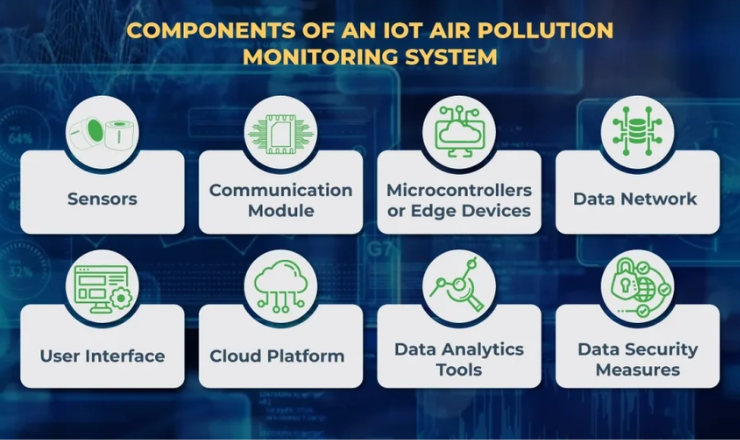
An IoT based air pollution monitoring system consists of several hardware and software components that work together to collect and process data. The hardware components include sensors, microcontrollers, and communication modules. The software components consist of a cloud platform, a mobile application, and a web-based dashboard.
The IoT-based air pollution monitoring system provides several benefits over traditional air pollution monitoring systems. It can collect real-time data from multiple locations, which then analyzed to identify the sources of pollution. It helps to take necessary measures to reduce it.
The system can also alert the users if the air quality reaches a dangerous level, allowing them to take precautions to protect themselves.
IoT Monitoring System components
IoT-based air pollution monitoring systems comprise several components that work together to collect and analyze air quality data. The components include:
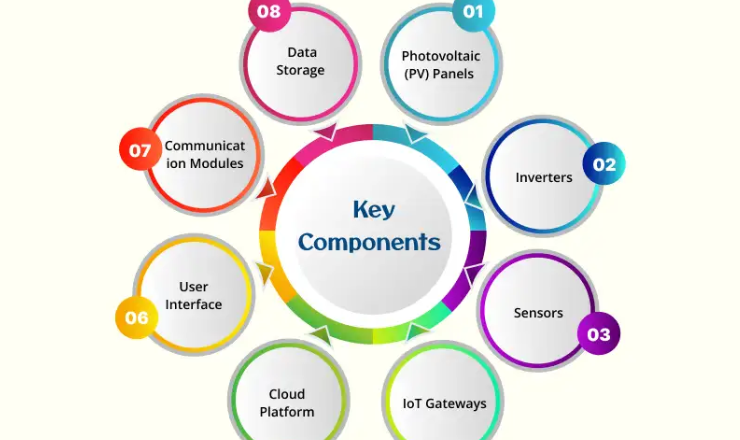
Enclosure:
The enclosure is the outer covering that protects the components from environmental factors such as dust, water, and temperature.
Sensors:
Sensors are the primary components of IoT-based air pollution monitoring systems. They measure various air quality parameters such as particulate matter, carbon monoxide, sulfur dioxide, and nitrogen oxides.
The sensors can be classified into two categories: physical and chemical sensors. Physical sensors measure parameters such as temperature, humidity, and pressure, while chemical sensors measure air pollutants.
Sensors detect environmental changes and gather raw data, acting as the system’s input mechanisms. Common types include temperature sensors (e.g., DHT22), humidity sensors (e.g., SHT31), motion sensors (e.g., accelerometers like MPU6050), and gas sensors (e.g., MQ-2). Actuators execute responses, such as motors for movement or relays for switching lights, based on processed data
Microcontroller:
The microcontroller is the brain of IoT-based air pollution monitoring systems. It receives data from the sensors, processes it, and sends it to the cloud server. The microcontroller is usually a microprocessor such as Arduino, Raspberry Pi, or similar devices.
Communication Module:
The communication module is responsible for transmitting data from the microcontroller to the cloud server. Communication modules can use various wireless technologies such as Wi-Fi, Bluetooth, or cellular networks.
Cloud Server:
The cloud server is a centralized platform for storing, analyzing, and sharing air quality data. It collects data from the communication module and stores it in a database. The cloud server also provides web and mobile applications for users to access the data.
Power Supply:
IoT-based air pollution monitoring systems require a power supply to operate. In case of permanent installations external power supply is provided and batteries are provided for portable devices.
Real-World Examples of IIoT Monitoring
Environmental Monitoring:
Maintaining proper temperature, humidity, air quality, and gas levels such as CO2 are critical for worker safety, process stability, material management, and equipment longevity. While sensors may already be in place, the information often remains on a display or a local PC.
With IIoT, that information now becomes available remotely and in real-time, permitting faster reaction to alarm conditions, especially when the person monitoring is not in the same location.
In the real-world example below, we show a network/server IT equipment room. It’s important that temperature and humidity be monitored to ensure they remain at the desired levels.
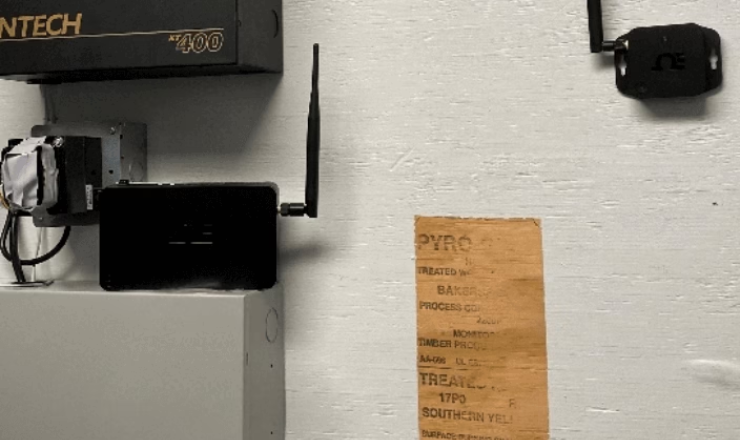
The IIoT solution consists of a temperature/humidity sensor (the small black box with antenna at the right in the photo below) and a gateway (the larger black box with antenna to the left). The real-time temperature/humidity data is transferred from the sensor through the gateway to secure cloud storage. Authorized users can access this data from any location with an internet connection via a laptop or mobile device browser.
In addition, cloud-based software analyzes the data for alarm conditions (i.e., high temperature or humidity) and notifies the appropriate personnel for action.
Process Monitoring:
IIoT enhances process automation by moving the sensing and control information centrally to secure cloud storage for analysis by machine learning and statistical analysis algorithms. An immediate benefit is the enablement of remote monitoring.
An additional benefit, since the data is centralized, is that the information from multiple machines, workcells, and locations is available for analysis.
The results of this aggregated data analysis enable predictive maintenance, process optimization, and performance benchmarking between workcells and plants. Note that the IIoT solution installs as either an enhancement or a replacement to the existing automation system.
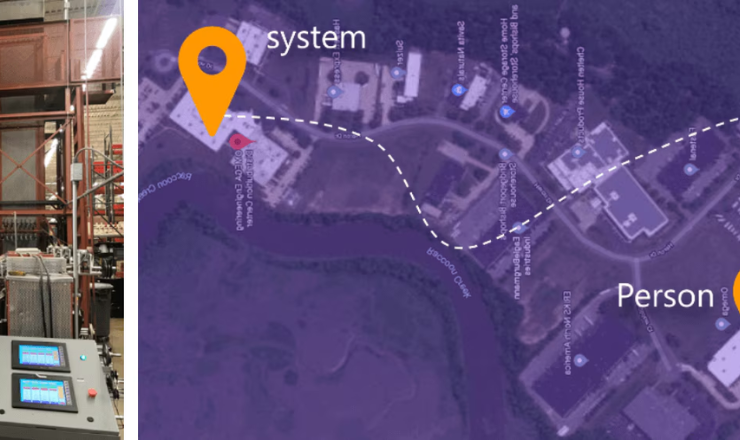
In the real-world example below, we have a system shown in the left photograph. The monitoring station is shown in the lower right of the photo. In the right photograph, we see that the person who monitors this process is located in a different building some distance away from the building with the process control system.
This person therefore had to physically go to the other building on a regular basis to check on the process. The IIoT solution was to connect a gateway (same as in the example above, not shown here) to the existing process controller.
The process data moves from the controller through the gateway to secure cloud storage. The process data is now available to the person in the other building via their laptop and web browser.
How does IoT reduce air pollution?
- IoT (Internet of Things) plays a crucial role in reducing air pollution through its ability to collect real-time data and enable smart decision-making. IoT devices, such as air quality sensors, can monitor pollutant levels in various environments, including cities, industries, and homes.
- This data can be analyzed to identify pollution sources, implement targeted mitigation strategies, and track the effectiveness of pollution control measures. IoT-enabled smart city solutions optimize transportation, waste management, and energy consumption, reducing emissions and improving air quality.
- Furthermore, IoT-based personal air quality monitors empower individuals to make informed choices and avoid high-pollution areas. By leveraging IoT technology, we can proactively address air pollution, create sustainable solutions, and promote healthier environments for present and future generations.
Real-Time Detection
Sensors in IoT devices continuously measure PM2.5, CO2, NO2, and other gases, providing instant data via Wi-Fi to cloud platforms. This identifies pollution hotspots, such as traffic-heavy areas, allowing authorities to deploy traffic controls or emission bans before levels spike.
Predictive Analytics
Data aggregation and AI analyze trends, forecasting pollution events from weather or traffic patterns. Cities adjust industrial operations or public alerts preemptively, reducing peak emissions by optimizing energy use in factories and vehicles.
Smart City Automation
IoT integrates with traffic lights, EV charging, and waste systems to lower emissions dynamically—e.g., rerouting vehicles or activating green zones. The block diagram shows sensors feeding microcontrollers that automate responses like ventilation in buildings.
Public Awareness
Mobile apps and dashboards share AQI data, encouraging reduced car use or factory slowdowns during high pollution. Community-driven reductions, like in Beijing’s IoT networks, have lowered smog by 20-30% through behavior changes.
How is the IoT-based air and Sound Pollution Monitoring System implemented?
An IoT-based air and sound pollution monitoring system is implemented using a network of sensors, connectivity technologies, and data analytics platforms.
Air quality sensors are deployed in strategic locations to measure pollutant levels such as particulate matter, gases, and volatile organic compounds (VOCs). Sound sensors capture noise levels and patterns in the environment.
These sensors are connected to a central data management system through wireless or wired communication protocols. The collected data is then processed and analyzed in real-time, leveraging cloud-based analytics platforms.
Users can access the monitoring system through web or mobile applications, which provide visualizations, alerts, and historical data.
This allows authorities, environmental agencies, and individuals to monitor pollution levels, identify hotspots, and take necessary actions for pollution control and mitigation. The system can also integrate with existing infrastructure, such as smart city platforms or industrial monitoring systems to provide a comprehensive view of environmental conditions and enable effective decision-making.
Popular IoT-Based Air Quality Monitoring System
Below is the list of some of the popular systems based on IoT air Quality Monitoring:
- Awair: Offers IoT-enabled air quality monitors that measure parameters such as temperature, humidity, CO2, VOCs, PM2.5, and more. The data is accessible through a mobile app or web platform.
- AirVisual: Provides IoT-based air quality monitors that measure outdoor and indoor air quality. The data is visualized through a mobile app and offers real-time updates and historical trends.
- Foobot: Monitors indoor air quality parameters, including VOCs, CO2, PM2.5, temperature, and humidity. It uses IoT technology to provide data and analysis via a smartphone app.
- Airthings: Offers IoT-based indoor air quality monitors that measure radon, CO2, humidity, temperature, airborne particles, and more. The data can be accessed through a mobile app or web dashboard.
- Netatmo: Provides IoT-based weather stations that include air quality monitoring capabilities. The data is accessible through a mobile app or web platform.
- PurpleAir: Specializes in IoT-based outdoor air quality monitoring, focusing on particulate matter (PM2.5 and PM10). The data is available through a web platform and API.
- uHoo: Monitors indoor air quality parameters, including VOCs, CO2, PM2.5, temperature, humidity, and more. The data can be accessed through a mobile app.
- Clarity Node: Offers IoT-enabled air quality monitors with multiple sensors for measuring various pollutants. The data is available through a cloud-based platform.
- Aeroqual: Provides IoT-based air quality monitoring solutions for both indoor and outdoor applications. The data is accessible through a cloud-based platform and API.
- Libelium Smart Environment PRO: An IoT-based solution that includes multiple sensors for air quality, temperature, humidity, noise, and more. The data is accessible through a cloud-based platform.
These IoT-based air quality monitoring systems cater to various needs, from personal indoor air quality monitoring to community-level outdoor air quality monitoring. They offer real-time data, historical trends, and often provide alerts and recommendations for improving air quality.
When selecting an IoT-based air quality monitoring system, consider factors such as the accuracy of sensors, compatibility with your IoT platform or network, data visualization capabilities, and the availability of data analytics for actionable insights.
IoT-Based Air Pollution Monitoring System Using NodeMCU
An IoT-based air pollution monitoring system using NodeMCU is a compact and cost-effective solution. NodeMCU, an open-source development board, can be integrated with air quality sensors to collect pollutant data.
This data can then be transmitted to a cloud-based platform for real-time monitoring and analysis, enabling proactive pollution control measures. The system offers a scalable and efficient approach to monitor air quality using IoT technology.
IoT-based air pollution monitoring systems using NodeMCU offer affordable, real-time tracking of pollutants like CO2, PM2.5, and gases in urban or indoor settings. NodeMCU, built on ESP8266, handles sensing, processing, and Wi-Fi data transmission to cloud platforms for alerts and dashboards.
Core Components
- NodeMCU (ESP8266): Main board with Wi-Fi, 3.3V logic, and GPIO pins for sensor interfacing.dinastirev+1
- Gas Sensors: MQ135 for CO2/ammonia, MQ2 for smoke/LPG, MQ7 for CO; analog output to A0 pin.quartzcomponents+1
- Environmental Sensors: DHT22 or BME280 for temperature/humidity, affecting pollution readings.how2electronics+1
- Display and Alerts: 16×2 LCD for local values, buzzer/LED for thresholds; optional OLED.dinastirev+1
- Power and Others: Breadboard, jumper wires, 10k potentiometer for LCD contrast, USB/battery supply.
Circuit Connections
Connect sensors to NodeMCU pins: MQ135 VCC/GND to 3.3V/GND, A0 to A0; DHT22 data to D4 with 10k pull-up. LCD uses I2C (SDA to D2, SCL to D1) or parallel pins (RS=D8, E=D7, D4-D7 to D3/D6/D5/D0). Power rails from VIN/GND; common ground prevents noise.roboelectrixx+1
Programming Steps
Use Arduino IDE with the ESP8266 board package. Install libraries: DHT, LiquidCrystal_I2C, WiFi, HTTPClient, ThingSpeak. Code structure reads sensors in a loop(), calibrates (e.g., MQ135 PPM = R0 * pow(10, gasFactor)), formats JSON, posts to ThingSpeak/Blynk every 20s via Wi-Fi. Add thresholds: if (ppm > 1000) trigger buzzer/email.robocraze+1
Software Workflow
- Initialize Wi-Fi with SSID/password.
- Calibrate sensors on boot (e.g., MQ135 R0 in clean air).
- Read/average values, compute AQI.
- Upload to cloud (HTTP POST) and update LCD.
- Alerts via IFTTT/Telegram if unsafe.
Cloud Integration
ThingSpeak channels store time-series data for graphs; Blynk apps show gauges on mobile. MQTT to AWS IoT for scalability; APIs enable public dashboards.ijrpr+1
Calibration and Testing
Burn-in MQ135 24-48h at 5V heater; compute R0 = Rs (clean air)/RL. Test in varied pollution: baseline ~400ppm CO2, spike with smoke. Accuracy ±10-20% vs pro meters.
Deployment Features
Portable via LiPo battery; solar for outdoors. GPS (NEO-6M) tags the location. Scales to mesh networks for city-wide coverage.journals.sagepub+1
IoT-based air pollution monitoring systems using NodeMCU enable low-cost, real-time tracking of pollutants like PM2.5, CO2, and gases in urban or industrial settings.
NodeMCU, built on ESP8266, serves as the core for sensor integration, Wi-Fi connectivity, and cloud data upload, making deployment simple for hobbyists or scalable networks. This setup supports everything from portable units to city-wide grids with mobile alerts.
Hardware Components
NodeMCU provides the microcontroller with Wi-Fi and multiple GPIO pins for sensors. Key sensors include MQ135 (CO2, NH3), MQ2/MQ7 (smoke, CO), DHT22 (temperature/humidity), and GP2Y1010AU0F (dust/PM). Breadboards, jumper wires, and optional LCDs or relays complete the setup for local display and actuation.
Circuit Assembly
Connect sensor VCC to NodeMCU 3.3V, GND to GND, and data pins: MQ135 AOUT to A0, DHT22 to D4 (with 10k pull-up), dust sensor to A0 (multiplex if needed).
Use Arduino Nano as an expander for extra analog inputs via serial (TX/RX on D5/D6) in multi-sensor builds to handle pin limits.
Programming Essentials
Use Arduino IDE with ESP8266 board package; install libraries like DHT-sensor-library, PubSubClient (MQTT), and ThingSpeak/Blynk.
Code initializes Wi-Fi, reads sensors in loops (e.g., analogRead(A0) for MQ135, converts to PPM via calibration formula), filters noise, and posts JSON data every 10-30 seconds. Error handling includes Wi-Fi reconnection and sensor warm-up delays.
Cloud and Data Flow
Data uploads to ThingSpeak (HTTP GET with API key), Blynk (virtual pins for apps), or MQTT brokers for dashboards. Thresholds (e.g., AQI >100) trigger emails/SMS via IFTTT. Local processing computes AQI using US EPA formulas for immediate alerts.
Deployment Steps
- Assemble and test on a breadboard indoors.
- Enclosed in a weatherproof IP65 box with ventilation for outdoor use; power via USB/solar (5V regulator).
- Flash code, configure Wi-Fi/credentials, mount on poles/rooftops/vehicles.
- Scale by networking multiple NodeMCUs to a central server; calibrate sensors weekly in clean air.youtube
- Initial boot: 1-2 min sensor preheat; monitor serial logs for stability.
Key Features
- Real-time AQI visualization on apps/web with graphs and maps.
- Alerts via push notifications for spikes (e.g., traffic pollution).
- Low power: Deep sleep modes extend battery life to days.
- Portable/GPS integration for mobile monitoring.
- Open-source scalability for smart cities; analytics for trends.journals.sagepub+1youtube
Advantages
- Cost-Effective: Total build under $20 using affordable components like NodeMCU ($5) and sensors ($3-10).
- Real-Time and Remote Access: Wi-Fi enables instant cloud syncing and mobile notifications, surpassing manual stations.
- Scalable and Portable: Easily expands to sensor networks; battery-powered for mobile use in vehicles or drones.
- User-Friendly: Open-source code and apps like Blynk simplify setup and visualization.
Limitations
- Sensor Accuracy: MQ135 drifts over time without calibration; can’t distinguish specific gases like CO vs. CO2 precisely.
- Power and Range: Wi-Fi drains battery quickly; limited range in remote areas without LoRa add-ons
- Environmental Sensitivity: Sensors affected by humidity/dust; needs frequent cleaning for outdoor longevity.
- Security Risks: Default Wi-Fi setups are vulnerable to hacking; they lack built-in encryption for data in transit.