
Leave a Comment / Engineering Materials /
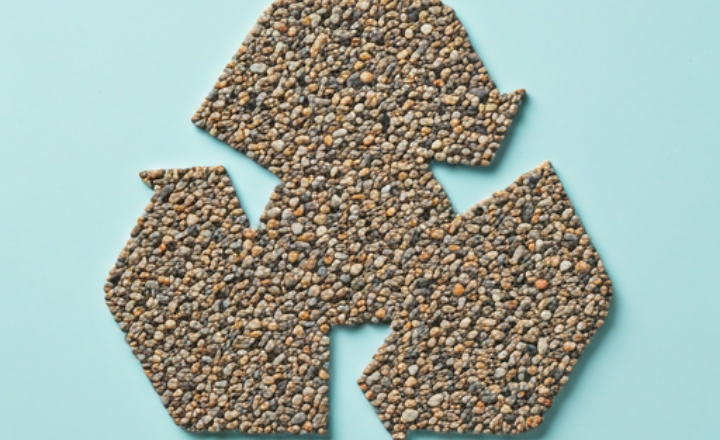
The construction industry is steadily embracing recycled aggregates as a pivotal strategy for sustainability and cost-efficiency. As natural resources dwindle and environmental concerns escalate, this innovative material offers a dual benefit: it reduces landfill waste while providing strong, durable components for new projects. Recent advancements in processing techniques have improved the quality of recycled aggregates, making them not just a viable alternative, but in many cases, superior to traditional materials.
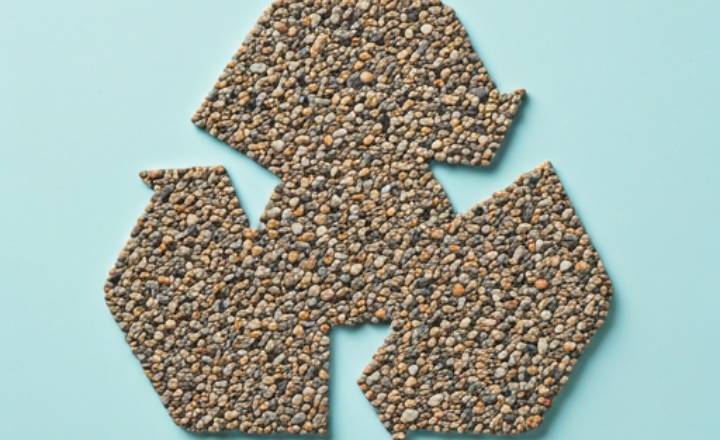
Companies that adopt this approach often find themselves gaining a competitive edge, attracting environmentally conscious clients who prioritize sustainability in their building practices. As the industry evolves, integrating recycled aggregates into mainstream construction will likely lead to groundbreaking architectural developments that not only respect ecological boundaries but also redefine modern building aesthetics.
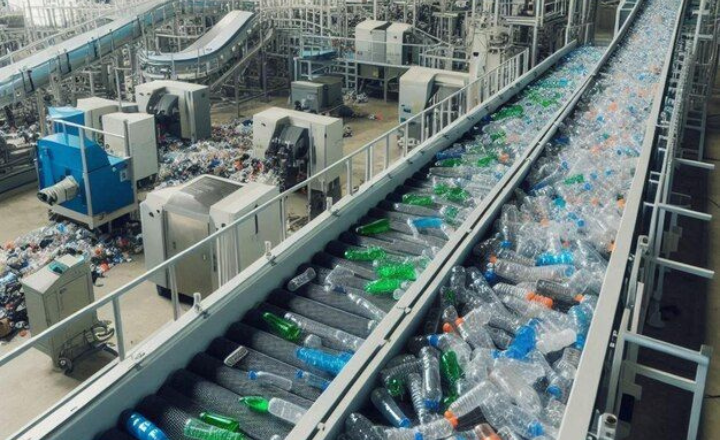
Derived from the meticulous reprocessing of construction and demolition waste, recycled aggregates are obtained by crushing, screening, and processing materials like concrete, asphalt, ceramics, and masonry from demolished structures. According to recent studies, these materials can potentially replace up to 30% of traditional natural aggregate consumption in various construction applications, significantly reducing the environmental footprint of infrastructure development.
Recycled aggregates (RA) are produced through a systematic and meticulous reprocessing method aimed at transforming construction and demolition waste into valuable building materials. This process typically involves several stages:
Pretreatment:
In the realm of sustainable construction, pretreatment processes for recycled aggregates play a crucial role in ensuring enhanced performance and longevity of concrete. Emerging technologies are further refining pretreatment methods, offering innovative solutions that promise greater efficiency and effectiveness.
Crushing:
The crushing process transforms discarded materials into high-quality aggregates, promoting a circular economy where materials are reused rather than relegated to landfills. This transformation highlights the potential for innovative construction solutions that prioritize environmental stewardship.As trends shift towards eco-friendly construction practices, these recycled aggregates play a pivotal role in reducing the carbon footprint of new developments.
Sieving and Separation:
Sieving and separation play pivotal roles in the effective utilization of recycled aggregates, transforming waste debris into valuable construction materials. This meticulous separation not only influences the structural integrity of future builds but also optimizes the use of resources, minimizing the need for virgin materials.
Post-treatment plays a crucial role in ensuring that the processed aggregates meet regulatory standards and are suitable for reuse in concrete production or other construction applications.
You may also read about: A Complete Guide to Aggregate Crushing Value Test
Key Factors Influencing the Characteristics of Recycled Aggregates
- Source Material: When exploring the source material for recycled aggregates, several key factors play a pivotal role in determining their characteristics. The type of construction waste, be it concrete, asphalt, or brick, also dictates the physical and mechanical properties of the recycled material.

Recycling Techniques:
- Number of Crushing Cycles: Multi-stage crushing results in finer particles with a more consistent size distribution but may increase energy consumption.
- Equipment and Methods: Advanced techniques, such as impact crushers or jaw crushers, influence the surface texture, particle shape, and overall quality of RA.
3. Storage Conditions: Proper storage is critical to maintaining the integrity of RA. Exposure to moisture, contamination, or prolonged weathering can degrade the material, affecting its physical and chemical properties.
Comparing Recycled and Natural Aggregates
- Particle Characteristics:
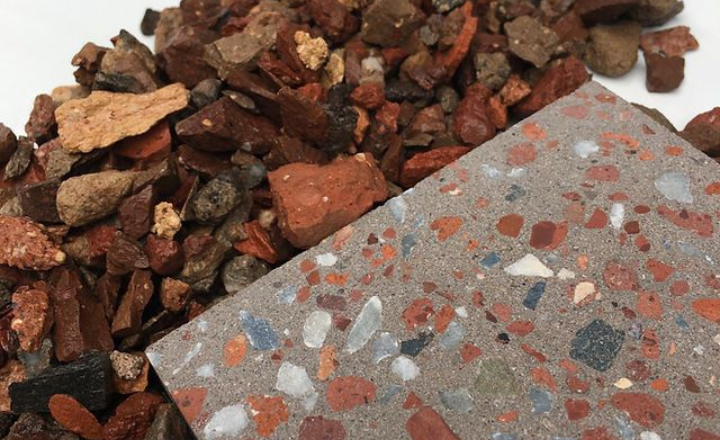
- Recycled aggregates typically exhibit greater variability in size distribution, shape, and surface texture compared to natural aggregates.
- The surface of RA particles is often rougher due to residual cement mortar and the crushing process, which enhances mechanical interlocking in concrete but can impact consistency.
- Water Absorption:
- RA has a substantially higher water absorption (WA) rate, ranging from 4.28% to 13.1%, compared to approximately 1.1% for natural aggregates.
- This is attributed to the porous structure of the residual mortar coating on RA particles, which increases the aggregate’s water demand and affects the workability of concrete.
- Density:
- On average, RA has a lower bulk density of 2295 kg/m³, compared to the higher density of natural aggregates at 2637 kg/m³.
- The lower density of RA can influence the overall unit weight and design considerations of RA-based concrete.
Performance in Concrete
- Strength:
- The compressive strength of concrete made with RA decreases as the replacement ratio of NA with RA increases.
- For replacement ratios below 30%, the strength reduction is typically negligible.
- At a 100% replacement ratio, studies show a 10–20% reduction in compressive strength, depending on the source and processing of the RA.
- Durability:
- The porosity and weaker interfacial transition zones (ITZ) between RA particles and the cement matrix contribute to increased shrinkage and creep in RA concrete.
- These factors may limit its application in structures requiring high durability unless additional treatments or admixtures are used to enhance performance.
Benefits and Challenges of Recycled Aggregates
Environmental Conservation
The impact of recycled aggregates on natural resource preservation is substantial. Recent studies indicate that replacing natural aggregates with recycled alternatives can reduce virgin material extraction by 60-70%. In the European Union alone, this has led to the preservation of approximately 250 million tons of natural aggregates annually. Construction sites implementing recycled aggregates have reported:
- A 65% reduction in raw material extraction
- Preservation of roughly 2.5 acres of natural landscape per large-scale project
- 40% decrease in water consumption during processing compared to virgin aggregate extraction
Waste Management and Circular Economy
The transformation of construction waste into valuable resources has shown remarkable results. Current data reveals:
- Global construction waste reached 3.0 billion tons in 2023
- Countries utilizing recycled aggregates effectively recycle up to 90% of their construction waste
- The Netherlands leads with a 98% recycling rate, followed by Germany at 95%
- The recycled aggregates market is projected to reach $9.2 billion by 2025, growing at an annual rate of 7.5%
Carbon Emission Reduction
- Recent environmental impact assessments demonstrate significant carbon savings:
- Using recycled aggregates reduces CO2 emissions by 25-40% compared to virgin materials
- A typical large-scale project using recycled aggregates saves approximately 3,000 tons of CO2 emissions
- Transportation-related emissions decrease by up to 65% due to localized processing
Challenges
Quality Variability and Consistency
Studies across multiple countries reveal consistent challenges:
- Material strength variations of up to 30% between different recycled aggregate batches
- Contamination levels ranging from 0.5% to 5% in processed materials
- Water absorption rates 2-3 times higher than natural aggregates
- Density variations of ±150 kg/m³ between batches
Processing Complexity and Energy Consumption
Current industry data highlights the resource demands:
- Processing requires 25-35 kWh of energy per ton of recycled aggregate
- Advanced sorting technology investments range from $500,000 to $2 million per facility
- Operating costs are typically 15-25% higher than traditional aggregate processing
- Regulatory and Standardization Progress:
Regulatory and Standardization Progress:
Recent developments show improving but incomplete standardization:
- Only 40% of countries have comprehensive recycled aggregate standards
- Existing standards often limit recycled content to 20-30% in structural applications
- Testing requirements vary significantly across regions, with European standards being the most developed
Economic Implications:
Market analysis reveals:
- Processing costs range from $8 to 15 per ton for recycled aggregates versus $5-10 for virgin materials
- Initial investment for processing facilities averages $3-5 million
- Return on investment period typically spans 3-5 years
- Government incentives can reduce costs by 20-30%
Conclusion
As the construction industry continues to evolve towards more sustainable practices, recycled aggregates will play an increasingly vital role in reducing environmental impact while meeting the growing demand for construction materials. The success of this transition will depend on continued innovation, regulatory support, and industry commitment to sustainable construction practices. With proper investment in technology and standards development, recycled aggregates are poised to become a cornerstone of sustainable construction in the coming decades.