
Introduction
The 2025 European blackouts, particularly the April 28 Iberian Peninsula event affecting Spain, Portugal, and parts of France, Germany, and Italy, exposed grid fragility from high interconnectivity, renewables integration challenges, and rapid 15 GW losses, accelerating demand for Home Energy Management Systems (HEMS) as household-level resilience tools.
Blackout Causes
A France-Spain interconnector failure at 12:33 CEST triggered cascading frequency drops, generation losses, and automatic load shedding failures across the Iberian grid, islanding it from Europe and overwhelming centralized infrastructure. Factors included demand volatility, distributed energy resource complexity, and insufficient local reserves, with ENTSO-E noting systemic risks in interconnected networks.
HEMS Future Role
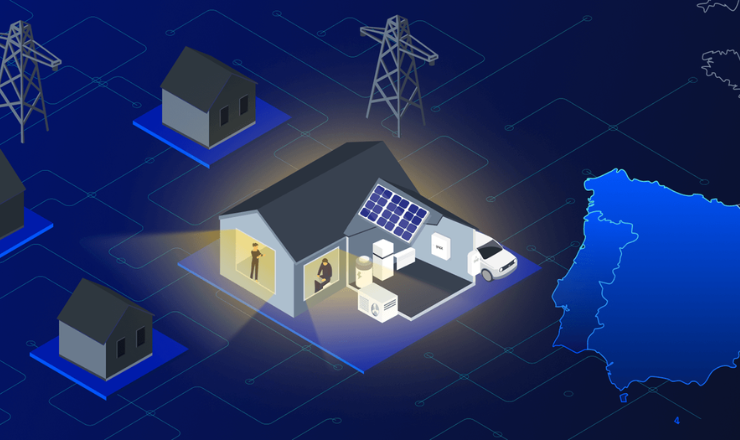
HEMS enable smart load prioritization for essentials like refrigeration and medical devices during outages, coordinate solar PV, islanding-capable batteries, and grid-forming inverters for microgrid autonomy, and ensure safe reconnection via hybrid local-cloud gateways. Post-blackout, Spain saw battery sales surges and utility focus on digital flexibility, positioning HEMS as strategic for providers, OEMs, and installers amid frequent disruptions. These systems shift resilience from transmission upgrades to distributed household prosumption, optimizing self-consumption and grid stability.
Artificial intelligence, with its ability to synthesize vast streams of sensor data, forecast rare events, and automate rapid decision-making, offers a toolkit to anticipate and avert blackouts before they unfold.
This article explores how AI could have changed the trajectory of the 2025 Iberian blackout and what steps utilities, regulators, and researchers should consider to harness this potential.
Why renewable energy requires greater grid intelligence
Professionals skilled in both renewables and AI are necessary because the transition to renewable energy has completely transformed grid design:
Traditional synchronous generators (coal, gas, nuclear) rely on large rotating components that naturally provide inertia and help stabilise grid frequency. Whereas most renewable technologies generate electricity in a form that can’t be sent directly into the grid but must first pass through an inverter, and most inverter-based renewables don’t provide a stabilising support system.
As generation becomes more distributed, more variable and less synchronous, it becomes harder to manage essential functions such as voltage control and damping oscillations across the network.
Disturbances in real time whether a voltage surge, an oscillation, or a line fault can now spread through the system more quickly, meaning they require faster, more automated and more intelligent responses to keep the grid stable
Where AI enters the picture
AI offers a transformation of grid resilience in three ways:
- Forecasting and anomaly detection: AI models trained in historical grid behaviour and real-time sensor data can identify unusual patterns such as oscillations, voltage spikes and rapid frequency changes before they become failures.
- Adaptive control and response: Once an anomaly is detected, AI systems can suggest or even autonomously initiate corrective actions.
- Virtual-lab simulation and training: Before deployment, the grid must be tested under many “what-if” and “worst-case” scenarios. Virtual labs allow engineers and AI systems to train on real data, test strategies and visualise outcomes in a safe environment.
Bridging the professional skills gap
With the technical complexity of combining renewables and AI for grid resilience, there is a growing skills gap that the University’s MSc in Renewable Energy and AI [page link] addresses.
Professionals need to understand both worlds:
The physics and engineering of renewable generation, storage and grid control. The algorithms, forecasting data and AI models that enable intelligent operation.
The systemic fragility behind the flickering lights
What these events demonstrate is that even the most technologically advanced and interconnected electricity networks are not immune to collapse. Governance gaps, limited real-time visibility, increasing demand volatility and the growing complexity of supply from distributed energy resources (DERs) are testing system limits. As ENTSO-E’s findings highlight, the path to greater reliability must be systemic and proactive.
How HEMS can help households weather future blackouts
A home energy management system (HEMS) won’t stop a blackout, but it can change the experience of living through one. Here’s how:
Smart load
prioritization Automatically powers down non-essential devices while maintaining critical functions like refrigeration, internet routers and medical equipment.
Battery + PV coordination
When paired with solar panels and batteries, a HEMS optimizes energy use during outages, extending autonomy and preserving comfort. In the case of a blackout, such as what happened in Spain and Portugal, it’s also important to not only have these assets, but have the right ones. For example, homeowners need a battery with “islanding” capabilities, that allows the home’s energy to continue operating regardless of what’s happening on the grid. Likewise, the PV needs a grid-forming inverter, which can operate independently of the grid when needed and form its own microgrid.
Grid connection management
gridX systems help enable safe and seamless reconnection when power is restored, avoiding instability or damage.
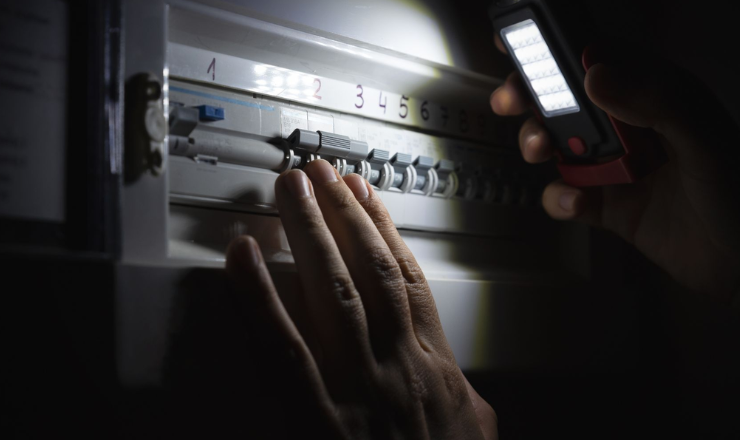
Having a HEMS during a blackout can be the difference between being warm and cozy or huddled around a candle.
Data and diagnostics
Even in blackout conditions, HEMS can collect and relay data, providing utilities, OEMs and installers with insights to improve system support and recovery.
Local gateway plus cloud connection
gridX uses a hybrid approach – a local gateway ensures key energy functions continue even when cloud services or internet access are interrupted, while cloud integration provides advanced analytics, remote configuration and updates. This architecture enhances both reliability and responsiveness, especially in blackout scenarios.
Since the Iberian blackout, we’ve seen a significant surge in battery sales across Spain, highlighting how consumers are prioritizing energy autonomy like never before.” – Andrea Albergoni, Senior Account Executive, gridX
What the 2025 Iberian blackout teaches us about energy management
According to gridX Senior Account Executive and Spanish market expert Andrea Albergoni, the need for smart, home energy solutions is more crucial than ever: “Since the Iberian blackout, we’ve seen a significant surge in battery sales across Spain, highlighting how consumers are prioritizing energy autonomy like never before.
At the same time, utilities and stakeholders I engage with are increasingly focused on digital solutions that not only enhance the end-user experience but also contribute meaningful flexibility and stability back to the grid.
This shift underscores a growing recognition that home energy management systems must serve a dual role: empowering consumers while supporting the broader energy ecosystem in a time of rising complexity and uncertainty.”
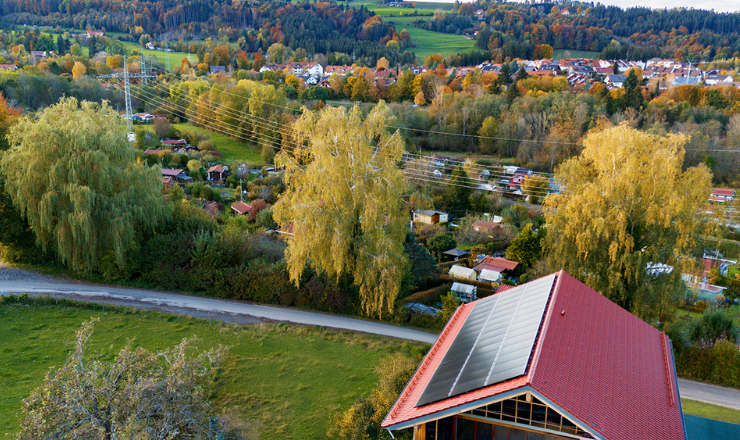
HEMS is the new standard for resilience
gridX positions Home Energy Management Systems (HEMS) as essential for distributed energy resilience, particularly after the 2025 Iberian blackouts exposed grid fragility from complexity, demand volatility, and interconnectivity risks.
gridX’s HEMS Capabilities
gridX’s XENON EMS features smart load prioritization to sustain critical appliances like refrigerators and medical devices during outages, while optimizing solar PV, batteries with islanding, and heat pumps for extended autonomy. A hybrid local gateway and cloud setup ensures offline operation with cyber-resilience, enabling safe grid reconnection and data insights for utilities.
Strategic Importance
These blackouts highlight the limits of centralized infrastructure, making HEMS a strategic must-have for energy providers, OEMs, and installers to differentiate via household-level flexibility, peak shaving, and prosumption. gridX reports surging battery sales in Spain post-blackout, with utilities prioritizing digital solutions for consumer empowerment and grid stability. As Energy Market Expert Irene Guerra Gil states, gridX focuses on smarter, autonomous homes prepared for frequent, complex outages, where resilience begins.