
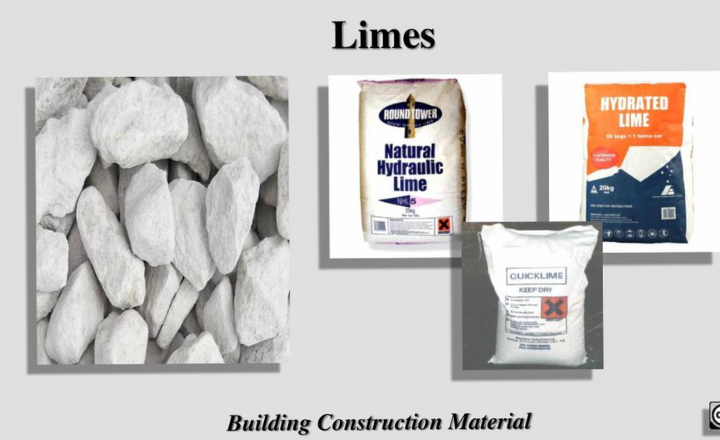
Lime is one of the oldest and most widely used binding materials in the construction industry. Its use dates back to ancient civilizations, where it played a key role in building durable structures, monuments, and masonry works that still exist today. Even in 2026, lime remains relevant due to its versatility, workability, and environmental benefits.
In construction, lime is primarily valued for its binding and cementing properties. When lime is mixed with sand and water, it forms lime mortar, which is commonly used for brickwork, stone masonry, and plastering.
- This mortar offers excellent workability and flexibility, making it especially suitable for restoration and heritage structures.
- When lime is combined with sand and coarse aggregates, it produces lime concrete, which was traditionally used for foundations, floors, and base layers in low-rise structures.
- One of the key properties of lime is its high plasticity, which allows mortar to be easily spread and adjusted during construction. Lime also has good breathability, meaning it allows moisture to pass through walls, reducing the risk of dampness and cracking.
- There are different types of lime used in construction, each with specific applications. Fat lime is known for its high purity and excellent workability.
- while hydraulic lime can set and harden even in the presence of water, making it suitable for damp conditions and structural work. Poor lime, containing impurities, is generally used for low-strength applications.
Classification of Lime in Construction
Based on composition, setting behavior, and strength characteristics, lime used in building construction is mainly classified into fat lime, hydraulic lime, and poor lime. Each type has distinct properties and applications in civil engineering works.
(i) Fat Lime (High-Calcium Lime)
Fat lime is the purest form of lime, containing approximately 95% calcium oxide (CaO). It is produced by calcining high-quality limestone that is free from clay and impurities.
When water is added to fat lime, it slakes vigorously, releasing a large amount of heat. During slaking, its volume increases by about 2 to 2.5 times, forming a soft, fine paste. Fat lime is white in color and is known for its excellent workability.
Properties of Fat Lime
- Hardens very slowly
- Sets slowly in the presence of air (by carbonation)
- Has a high degree of plasticity
- White in color
- Slakes vigorously with water
Uses of Fat Lime
- Plastering and whitewashing
- Brick and stone masonry
- Decorative and architectural works
- Repair and restoration of heritage buildings
Fat lime is not suitable for damp conditions or structural works because of its slow setting nature.
(ii) Hydraulic Lime
Hydraulic lime contains clay, silica, and small amounts of ferrous oxide, which allow it to set and harden even in the presence of water. This property makes hydraulic lime stronger and more durable than fat lime.
Depending on the percentage of clay content, hydraulic lime is further divided into three main types:
(a) Feebly Hydraulic Lime
Clay content: 5% – 10%
This type contains a small amount of clay and shows limited hydraulic properties.
Characteristics:
- Sets slowly
- Moderate strength
- Requires air for complete hardening
Uses:
- Masonry works in dry conditions
- Plastering where mild strength is sufficient
- Low-load-bearing structures
(b) Moderately Hydraulic Lime
Clay content: 11% – 20%
This type provides a balanced combination of strength and workability.
Characteristics:
- Sets faster than feebly hydraulic lime
- Good resistance to moisture
- Moderate durability
Uses:
- Brick and stone masonry
- Foundations of low-rise buildings
- Construction in moderately damp environments
(c) Eminently Hydraulic Lime
Clay content: 21% – 30%
Eminently hydraulic lime has the highest strength among all types of lime and sets quickly, even under water.
Characteristics:
- Rapid setting
- High compressive strength
- Excellent resistance to moisture
Uses:
- Foundations and structural works
- Bridges, culverts, and water-related structures
- Construction in wet and coastal areas
(iii) Poor Lime (Lean Lime)
Poor lime contains a high percentage of impurities, such as clay and sand, which significantly reduce its binding strength.
Properties of Poor Lime
- Low plasticity
- Weak binding strength
- Slow and irregular setting
Uses of Poor Lime
- Temporary construction works
- Rural and low-cost housing
- Non-load-bearing walls
Poor lime is generally not recommended for major construction works due to its low strength and durability.
Tests on Limestone for Construction Purposes
Before limestone is used in construction or for the manufacture of lime, it is essential to test its quality and composition. These tests help determine whether the limestone is suitable for producing fat lime, hydraulic lime, or poor lime. The commonly performed practical tests on limestone are physical tests, heat test, chemical test, and ball tests.
(i) Physical Test
The physical test is a preliminary field test used to identify limestone based on its appearance, color, smell, and texture.
Observations and Interpretation:
- Pure limestone is usually white or light grey in color.
- Hydraulic limestone generally appears bluish-grey, brown, or dark-colored due to the presence of clay and impurities.
- When rubbed or freshly broken, hydraulic limestone often gives an earthy smell.
- A clayey taste (when carefully tested in laboratory conditions) indicates the presence of impurities.
- Hard lumps in limestone suggest the presence of quicklime or unburnt limestone, which may affect quality.
This test provides a quick visual assessment but must be supported by other tests for accuracy.
(ii) Heat Test
The heat test helps estimate the calcium carbonate (CaCO₃) content of limestone.
Procedure:
- A dry piece of limestone is weighed and its initial weight is recorded as W₁.
- The sample is then heated in an open fire or furnace for several hours.
- After cooling, the stone is weighed again and recorded as W₂.
Interpretation:
- The loss in weight (W₁ − W₂) represents the amount of carbon dioxide released during heating.
- A greater loss of weight indicates a higher percentage of calcium carbonate, which means better-quality limestone.
- Low weight loss suggests impure limestone with less calcium carbonate content.
(iii) Chemical Test
The chemical test is conducted to determine the purity and class of lime obtained from limestone.
Procedure:
- A small quantity of powdered limestone or lime is placed in a test tube.
- Dilute hydrochloric acid (HCl) is added.
- The mixture is stirred and left undisturbed for 24 hours.
Observations:
- Vigorous effervescence with very little residue indicates pure limestone.
- Weak effervescence and a large amount of residue indicate impure limestone.
- In some cases, a gel-like substance is formed.
Classification Based on Gel Formation:
- Class A lime: Gel does not flow when the test tube is inverted.
- Class B lime: Gel flows slowly downward.
- Class C lime: No gel formation occurs.
This test helps in identifying the hydraulic nature of lime.
(iv) Ball Test
The ball test is mainly used to differentiate between Class B and Class C lime.
Procedure:
- Lime is mixed with sufficient water to form a paste.
- Small balls of about 40 mm diameter are made.
- These balls are left undisturbed for 6 hours.
- Afterward, the balls are placed in a basin of water.
Observations and Results:
- If the balls show slow expansion followed by gradual disintegration, the lime is classified as Class C lime.
- If there is little or no expansion, and only surface cracks appear, the lime belongs to Class B.
Uses of Lime in Civil Engineering
Lime is a versatile and widely used material in civil engineering and construction. Due to its binding properties, workability, and environmental benefits, lime has been used from ancient times and continues to play an important role in modern construction practices.
1. Whitewashing and Finishing Works
Lime is commonly used for whitewashing walls and ceilings. It provides a smooth, bright finish and has natural antibacterial properties, making it suitable for residential and public buildings.
2. Lime Mortar for Masonry and Plastering
Lime is mixed with sand and water to prepare lime mortar, which is widely used in:
- Brick masonry
- Stone masonry
- Plastering works
Lime mortar offers excellent workability, flexibility, and breathability, reducing the risk of cracks in walls.
3. Manufacture of Lime-Sand Bricks
Lime is used in the production of lime-sand (calcium silicate) bricks, which are known for:
- Uniform shape and smooth surface
- Good compressive strength
- Better resistance to fire
These bricks are commonly used in load-bearing and non-load-bearing walls.
4. Soil Stabilization
One of the most important modern uses of lime is in soil stabilization. Lime improves the engineering properties of clayey soils by:
- Increasing soil strength
- Reducing plasticity and swelling
- Improving load-bearing capacity
This application is widely used in road construction, embankments, and foundations.
5. Refractory Material in Furnaces
Lime is used as a refractory lining material in open hearth furnaces and industrial kilns due to its ability to withstand high temperatures without losing strength.
6. Manufacture of Cement
Lime is a key raw material in the manufacture of cement. It provides calcium oxide, which reacts with silica and alumina to form cement compounds responsible for strength and durability.
7. Environmental and Modern Uses (2026 Perspective)
In modern construction, lime is also used for:
- Wastewater treatment
- Flue gas desulfurization in industries
- Eco-friendly and sustainable buildings
- Restoration and conservation of heritage structures
Importance of Limestone Testing in Modern Construction (2026)
In 2026, limestone testing remains crucial for ensuring durability, strength, and sustainability in construction. Proper testing prevents structural failures, improves material selection, and supports eco-friendly construction practices. These tests are widely used in quality control, academic studies, and field investigations.
- Correct material selection – Classifying lime into types such as fat (non‑hydraulic), hydraulic (feebly, moderately, eminently), and poor lime helps engineers choose the right binder for masonry, plaster, renders, or structural work.
- Performance in wet vs dry conditions – Hydraulic lime sets in the presence of water and is ideal for damp or exterior environments, while non‑hydraulic lime is better for internal plaster and conservation work.
- Strength and setting time control – Higher‑class hydraulic limes (e.g., eminently hydraulic) give greater compressive strength and faster set, suitable for arches, domes, and load‑bearing elements, whereas lower‑class or fat lime gives slower set and more flexibility.
- Durability and crack resistance – Properly classified lime mortars are more flexible and breathable, reducing shrinkage cracks and allowing moisture to escape, which protects bricks and stone in both new and historic buildings.
- Compatibility with historic structures – In restoration and retrofitting, using the correct lime class (often softer, non‑hydraulic or low‑hydraulic) prevents damage to old masonry by matching the original material’s behavior.
- Sustainability and carbon footprint – Modern construction increasingly favors lime because its classification system guides use of lower‑carbon binders; many lime mortars have far less embodied carbon than cement and can even re‑absorb CO₂ over time.
- Standardization and quality control – National standards (such as IS: 712 in India) classify lime into classes A–F, ensuring consistent quality, predictable performance, and easier specification in design and contracts.
- Soil stabilization and eco‑friendly solutions – Classified lime is used in soil stabilization for roads and foundations, where the right type improves strength and reduces erosion while remaining more environmentally friendly than some cement‑based alternatives.
Lime classification in 2026 is crucial because it links material science, environmental goals, and structural safety, enabling engineers to design smarter, greener, and longer‑lasting buildings.
Conclusion
Lime is one of the most important and versatile materials used in civil engineering. From ancient construction practices to modern sustainable building solutions, lime has proven its value as a reliable binding and stabilizing material. Its wide range of applications including whitewashing, masonry mortar, plastering, soil stabilization, brick manufacturing, and cement production highlights its significance in both traditional and contemporary construction.
Different types of lime, such as fat lime, hydraulic lime, and poor lime, offer varied properties that make them suitable for specific construction needs. Proper testing and classification of limestone ensure the selection of the right type of lime, thereby improving the strength, durability, and long-term performance of structures.
In 2026, with the growing focus on eco-friendly and sustainable construction, lime continues to play a vital role due to its lower environmental impact, breathability, and compatibility with natural materials. When used correctly, lime not only enhances construction quality but also contributes to safer, more durable, and environmentally responsible infrastructure.
What are the properties of lime?
It has good plastic properties. It gives strength to the masonry when used as mortar. It stiffens quite easily in a short time. It is easily workable. It has good adhering properties with stone and bricks. Its shrinkage is comparatively low, and hence masonry in lime mortar in more.
What are the three types of lime?
4 Types of Limes Quick lime. It is also known as caustic lime. … Slaked lime. It is also known as hydrate of lime. … Fat lime. It is also known as high calcium lime or pure lime or rich lime or white lime. … Hydraulic lime. It is also known as water lime.
How many types of lime are in construction?
Lime is classified as fat lime, hydraulic lime, or poor lime depending on clay content. Fat lime contains 95% calcium oxide and is used for plastering and thin mortar joints. Hydraulic lime sets under water due to clay content and is divided into feebly, moderately, and eminently hydraulic types.